How to Pack Canvas Art for Moving: 5 Safe Methods and Pro Tips
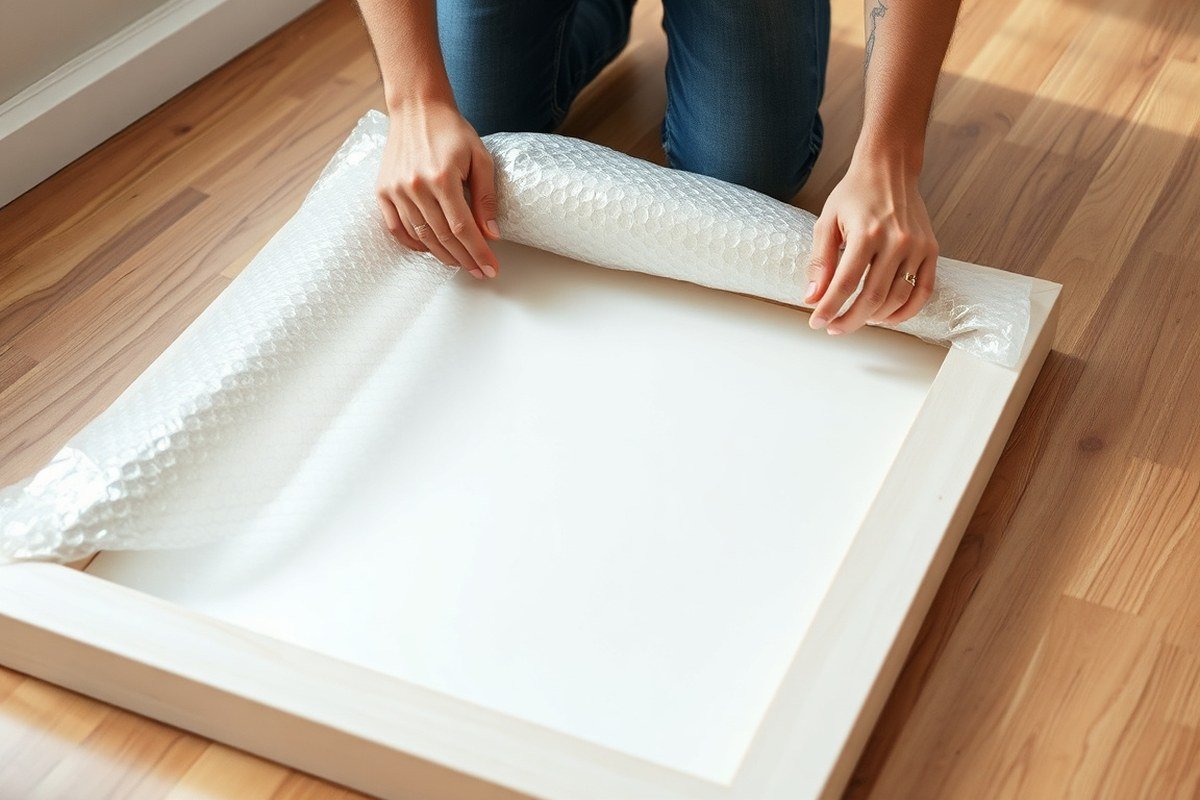
Knowing how to pack canvas art for moving means protecting your artwork from damage during transit. Use bubble wrap sheets larger than the canvas with at least 2 inches of overlap on all sides to cushion it well. First, clean the art surface gently to avoid sealing in dust or debris under the wrap.
Key Takeaways
- Select a packing method based on your canvas size and frame type for optimal protection.
- Wrap canvas art with a bubble wrap sheet covering all edges with a 2-inch margin.
- Use a box that closely fits your canvas and fill empty spaces with bubble wrap to prevent movement.
- Consider the rolling method for unframed canvases to reduce creasing risk during transport.
- Declare high-value artworks in writing to your mover to avoid liability limits under FMCSA rules.
- Fill fragile art boxes with styrofoam for shock absorption inside the moving container.
1. Choose the Best Packing Method for Your Canvas Art
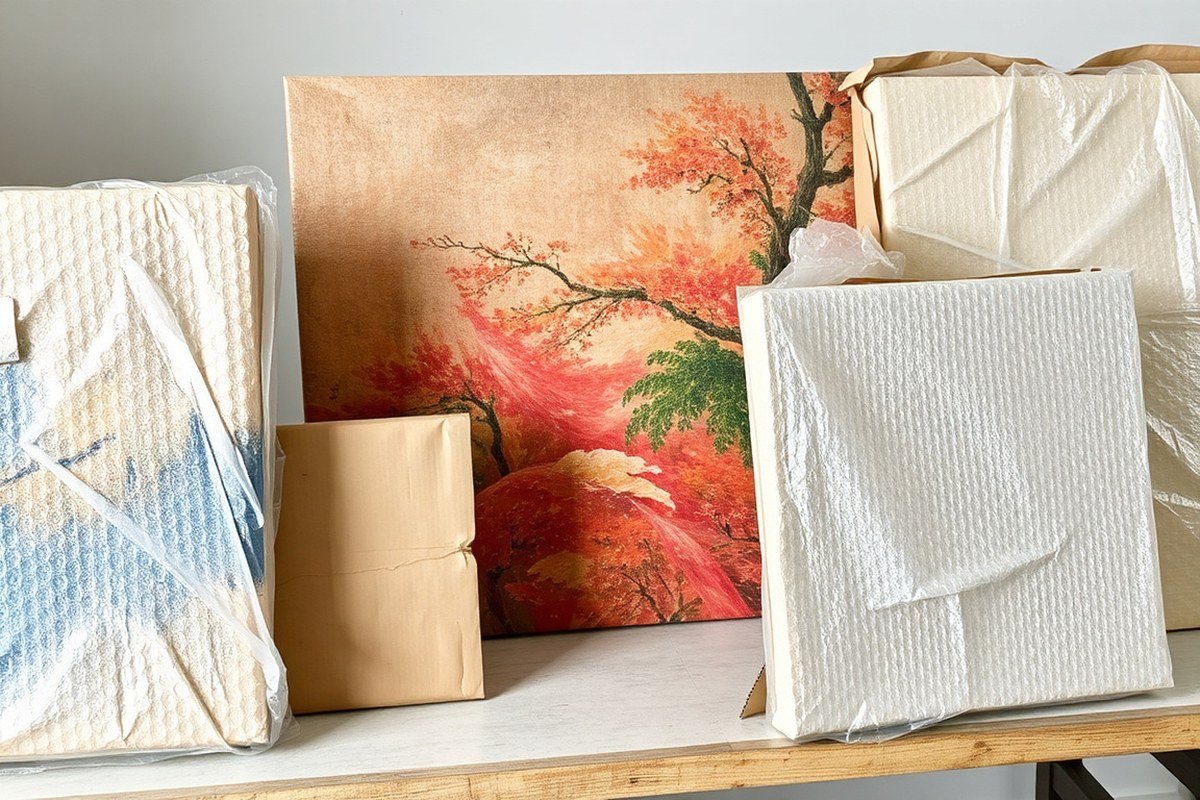
Packing canvas art for moving involves four main methods: using wooden crates, cardboard boxes, rolling, and wrapping with protective paper. Each approach fits different types of canvas artwork depending on size, value, and whether the canvas is stretched or unframed. For large or valuable pieces, a custom wooden crate provides the highest level of protection. These crates are built to exact dimensions, often on-site by professional movers or crating specialists, and cost significantly more than other methods but help prevent damage during handling and transit.
The cardboard box method suits framed canvases, especially medium to small pieces. Using a sturdy box slightly larger than the artwork allows space for padding like bubble wrap or foam sheets, offering moderate protection without high costs. This method is easy and affordable but less secure for very large or delicate art.
Rolling canvases is a practical option only for unframed artwork. The canvas is rolled, never folded, around a tube, then wrapped with glassine or wax paper to protect the paint surface. Rolling is cheap and space-saving but poses risks if the paint is brittle or thickly layered, which can crack or flake. It works best for resilient canvases that are less valuable, while valuable or textured pieces should avoid rolling.
The glassine or wax paper wrapping method provides a simple shield against dust and abrasion, usually applied before boxing or rolling. This is often paired with bubble wrap but by itself offers low protection and suits short moves or temporary storage.
| Method | Suitable For | Cost | Ease of Use | Protection Level |
|---|---|---|---|---|
| Wooden Crate | Large or valuable canvases | Expensive ($100+ per crate) | Difficult | High |
| Cardboard Box | Framed canvases | Cheap ($5, 20) | Easy | Moderate |
| Rolling | Unframed, flexible canvases | Cheap ($1, 5 for tubes and paper) | Easy | Moderate |
| Wrapping with Glassine/Wax Paper | Unframed surfaces, additional layer | Cheap ($1, 3 per sheet) | Easy | Low |
Choose wooden crates when artwork is both valuable and large, providing a sturdy shell that withstands bumps and pressure. Use cardboard boxes for framed pieces that fit securely and allow padding to prevent movement. Roll canvases only if unframed and the paint is flexible, ensuring the rolled diameter stays large enough to avoid cracking. Add glassine or wax paper as a protective layer before other packing steps but avoid relying on it alone for transport protection. Your selection depends on balancing budget, artwork size, and how fragile or valuable your canvas art is.
2. Step-by-Step Guide to Wrapping and Protecting Your Canvas Surface
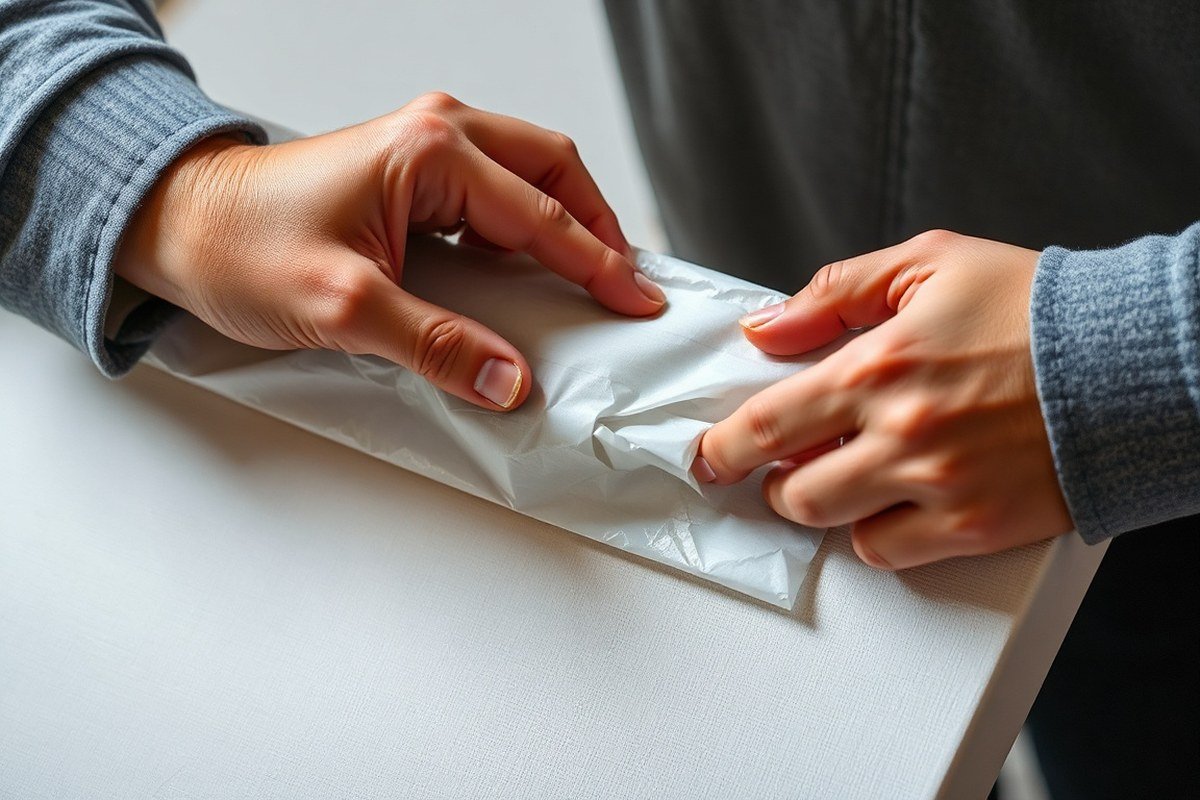
Protecting the delicate surface of your canvas painting starts with the right materials and layering technique. Your goal is to keep the paint from touching any sticky or abrasive materials and to buffer the entire piece against shocks and pressure. Glassine or acid-free paper is ideal because it prevents sticking and allows the painting to breathe, unlike wax paper, which may leave residues. Tape should never touch the painted surface directly to avoid damage. Instead, secure wrapping layers on the back or edges only. Use at least two layers of bubble wrap with the bubbles facing outward; this protects the painting without imprinting the bubble pattern on the paint.
- Lay down a clean, flat surface covered with a large sheet of glassine or acid-free paper. Set your canvas face-down on this.
- Cover the entire painted surface with another sheet of glassine or acid-free paper, folding neatly around the edges but avoiding tape contact on the front or edges where paint may be exposed.
- Add the first layer of bubble wrap over the paper-wrapped front with the bubbles facing outward. This reduces pressure points and avoids bubble imprints on the paint.
- Wrap the bubble wrap tightly around the sides and back of the frame. Fold excess bubble wrap over the back of the canvas.
- Secure the bubble wrap with packing or masking tape only on the back side, never on the front or painted edges.
- Repeat to add a second layer of bubble wrap using the same bubble facing outward approach for extra cushion, especially if the canvas is unframed or extra fragile.
- Protect corners with additional padding such as foam or corner protectors before boxing, as corners are vulnerable during moves.
3. How to Box and Pad Canvas Art for Safe Transit
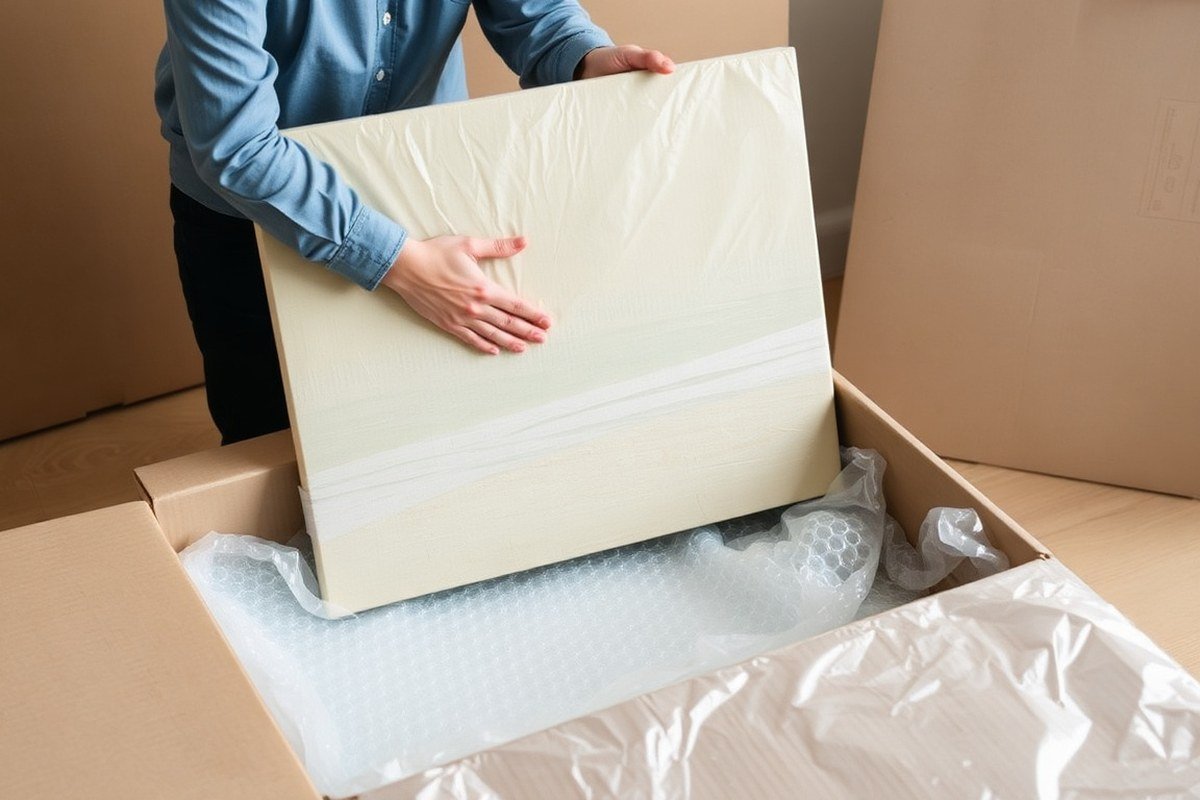
Picking a box slightly larger than your framed canvas by 2 to 4 inches on all sides creates space for padding that prevents movement during transit. Use a heavy-duty, acid-free cardboard box designed for artwork whenever possible. To fill gaps, place foam sheets, crumpled packing paper, or soft blankets around the artwork. This cushions the canvas and keeps it from shifting, reducing the risk of dents or scratches.
Packing multiple canvases together is possible if they are small and lightweight. Separate each canvas with a thin piece of cardboard or foam board to avoid direct contact. Stack them vertically, similar to books on a shelf, not flat, to prevent pressure damage. Avoid overpacking that places weight on the canvases below, and don’t stack boxes containing canvas art on top of one another if possible.
Label each box clearly with “Fragile” and “Canvas Art” on several sides. This alerts movers to handle the contents gently and helps you identify boxes easily. Also, mark which side should be kept upright to maintain the artwork’s positioning.
- Select a box 2 to 4 inches larger on each side than your framed canvas.
- Line the inside bottom and sides of the box with foam sheets, bubble wrap, or soft blankets.
- Place your wrapped canvas vertically in the box, avoiding laying it flat.
- Fill all empty spaces with crumpled packing paper, foam peanuts, or folded blankets to prevent any shifting.
- If packing multiple small canvases, insert thin cardboard pieces between them and stack them vertically.
- Close the box carefully and reinforce edges with strong packing tape.
- Label the box on at least two sides with “Fragile,” “Canvas Art,” and arrows to show which side faces up.
- Double-check for any movement by gently shaking the box before sealing it completely.
4. Securing Canvas Art in Transit: Loading and Truck Placement Tips
Position canvas art boxes upright along the truck walls to reduce the risk of shifting and crushing during transit. Keep artwork away from heavy objects, placing it between sturdy items that won’t slide around. Avoid stacking boxes flat or on top of each other. Ideally, stand boxes on their edges to prevent pressure that can warp canvases or crack any framed glass. Use straps or bungee cords to secure boxes firmly in place against the truck walls or tied-down anchor points to minimize movement over bumps or turns.
Packing materials should fill any space inside boxes or crates to prevent art from shifting inside. If the moving truck is crowded, fit art-packed boxes at the top and closest to the cab to keep a stable environment and easier access. For long-distance moves, avoid exposing canvas art to temperature extremes or humidity inside the truck. Use climate-controlled transport if possible. On local moves, unloading quickly helps limit exposure to heat or cold that can cause canvas stretching or cracking.
When space is tight, protect canvases by placing them in smaller, well-padded boxes rather than one large box. Secure these with more straps or use padding like moving blankets between boxes. Check that boxes do not lean or slide after loading. Common pitfalls include stacking boxes flat, failing to strap down secured art boxes, and placing art near heavy loose items that can fall onto it. Carefully organize the loading order to maintain stability and reduce shifting risks throughout the journey.
5. Protecting and Insuring Valuable Canvas Art During the Move
You must Declare any high-value canvas art to your mover because federal laws cap their liability on items valued over $100 per pound. Prepare a thorough inventory listing each artwork’s title, artist, and estimated worth, then include this with your shipping paperwork. The declaration needs to be clear and submitted ahead of the move. Doing this improve the mover’s obligation to take extra care with your valuable art.
Choosing whether to hire professional art movers depends mainly on the size, value, and fragility of your canvas pieces. For artwork over several hundred dollars or large, easily damaged canvases, professionals provide specialized packing materials, crating, and equipment that lower the risk of damage. Their expertise often justifies the cost by reducing stress and potential loss. For example, professional services offer custom crates and climate-controlled transport, which protect delicate surfaces and paint finishes from temperature and humidity fluctuations.
Insurance options typically include basic coverage by the mover, which might not suffice for high-value art. Many moving companies can arrange third-party insurance that offers full value protection, covering costs to repair or replace your artwork if damage occurs. It is wise to compare these options and check policy details such as deductibles and coverage limits. Transparent communication about your artwork’s value with the insurer ensures appropriate coverage and peace of mind.
Taking precautions during the move helps minimize risks. Clearly marking boxes with “fragile” and the contents inside alerts handlers to treat your artwork with care. Use quality packing supplies, such as corrugated or art-specific boxes, when possible. Keep art in climate-stable environments during storage and transport to avoid warping or fading. Avoid stacking artwork beneath heavy items in transit. A reliable step checklist for declaring and documenting your pieces includes photographing each canvas, noting dimensions and condition, and keeping all receipts or appraisals handy for insurance claims.
Step-by-Step Action Plan for Packing Canvas Art
Follow these steps to pack your canvas art securely and reduce the risk of damage during your move.
- Before packing: Clean the canvas surface gently with a dry, soft cloth to remove dust. This helps prevent scratches or grime from settling under protective layers.
- Day 1: Wrap the canvas tightly with acid-free glassine paper. Confirm full coverage without wrinkles that could press into the paint.
- Day 2: Add a layer of bubble wrap, keeping bubbles away from the painted surface. Check that the wrap is snug but not too tight to avoid tension on the canvas.
- Day 3: Prepare a well-sized cardboard box or a custom art crate. The art should fit without bending or pressure points.
- Day 4: Line the box with packing foam or crumpled acid-free paper. Place the wrapped canvas inside, filling any gaps with padding to prevent shifting.
- Moving day: Load the boxed canvas upright in the moving vehicle with heavier items on the floor and away from the art. Secure with straps to limit movement.
- Upon arrival: Inspect your canvas for signs of shifting or damage right after unloading. This helps catch issues early before unpacking.
Frequently Asked Questions
What Is the Best Way to Pack Rolled Canvas Art for Moving?
The best way to pack rolled canvas art is to roll it gently without folding and secure it with glassine or wax paper. This prevents creases and moisture damage during transport.
Can Canvas Art Be Packed Without a Frame for Moving?
Canvas art without a frame should be rolled carefully, never folded, then wrapped in protective paper. This method reduces damage risk and keeps the canvas taut.
How Do Custom Crates Protect Canvas Art During a Move?
Custom crates provide rigid protection and cushioning tailored to the artwork’s dimensions. They minimize vibration and impact, ideal for valuable or large canvas pieces.
Is It Necessary to Label Canvas Art Boxes as Fragile?
Yes, labeling boxes as fragile alerts movers to handle them with care. Proper handling reduces the chance of scratches or punctures on your artwork.
Can Professional Movers Pack Canvas Art for Me?
Hiring professionals to pack canvas art can ensure it’s done with expertise and proper materials. This service often reduces damage risk and saves you time.
The Bottom Line
Packing canvas art properly requires attention to materials and handling during every phase. Protecting surfaces with acid-free paper and using the right box minimize risks of damage. Start wrapping your artwork today using the outlined steps to give your pieces the best chance of arriving at your new home in pristine condition.