
How to Make Money with Art: 6 Proven Ways That Maximize Your Income
How to make money with art starts by selling your original art and prints directly to buyers, capturing the full value of your creativity. Consider pricing your work confidently to reflect its worth, avoiding underselling out of fear. Starting at art fairs or online marketplaces helps you connect with designers, collectors, and galleries ready to buy.
Key Takeaways
- Sell original pieces at art fairs and galleries to reach serious collectors and maximize income.
- Create high-quality prints and physical products to offer affordable options that expand your customer base.
- Use confident pricing based on your art’s value, not fear, to increase your earnings.
- Participate in indoor art fairs where booth fees range from $1,500 to over $10,000, rewarding strong sales.
- Use your existing designs for passive income through print-on-demand platforms and licensing deals.
- Build steady commission income by offering custom work like pet portraits or business illustrations priced from $500 up.
1. Sell Original Art, Prints, and Physical Products

Pricing original art involves considering size, technique, and market demand. A common method uses $10 to $15 per square inch for emerging artists, adjusting for style and buyer interest. Prints usually sell for 25% to 50% of the original’s price. Factoring in production cost, time, and local market rates ensures competitive pricing. Selling originals commands premium pricing, while prints and merchandise appeal to a broader audience.
Marketing and selling works best using a mix of online and offline methods. Platforms like Etsy charge a 20¢ listing fee and 6.5% transaction fee and suit handmade prints and merch. Saatchi Art focuses on originals but takes a 40% commission. Local art fairs connect you with buyers face-to-face but require booth fees ranging from $100 to over $10,000 depending on the event’s prestige. Preparing for fairs means pricing your inventory right, setting up an inviting display, and having enough stock.
Shipping and taxes must be factored in. Shipping prints safely usually costs $5 to $20 domestically and varies by size and protection. Booth fees and commissions reduce profit margins, so price accordingly. Keep records for tax purposes and follow sales tax laws, which differ by state.
Merchandising extends your art into products like cards, calendars, and apparel. These can be sold via print-on-demand or locally. Prints on quality paper in limited editions often attract collectors. To set up your sales effectively, follow these steps:
- Create high-quality images of your art and prints with good lighting and clear detail.
- Research prices of similar artworks and prints online and locally to position yours competitively.
- List your work on Etsy or Saatchi Art by setting up an account, adding titles, descriptions, and prices accurately.
- Create clear shipping policies including packaging methods, shipping costs, and delivery timeframes.
- Prepare for art fairs with a checklist: clear pricing labels, sturdy displays, sufficient inventory, business cards, and a payment system like a mobile card reader.
- Promote your listings and events through email, flyers, and word-of-mouth to attract buyers.
- Track all expenses and sales including booth fees, platform commissions, shipping, and materials to calculate profits and plan future pricing.
- Follow local sales tax laws by registering your business if needed and collecting taxes on sales.
2. Generate Passive Income with Print-on-Demand and Licensing
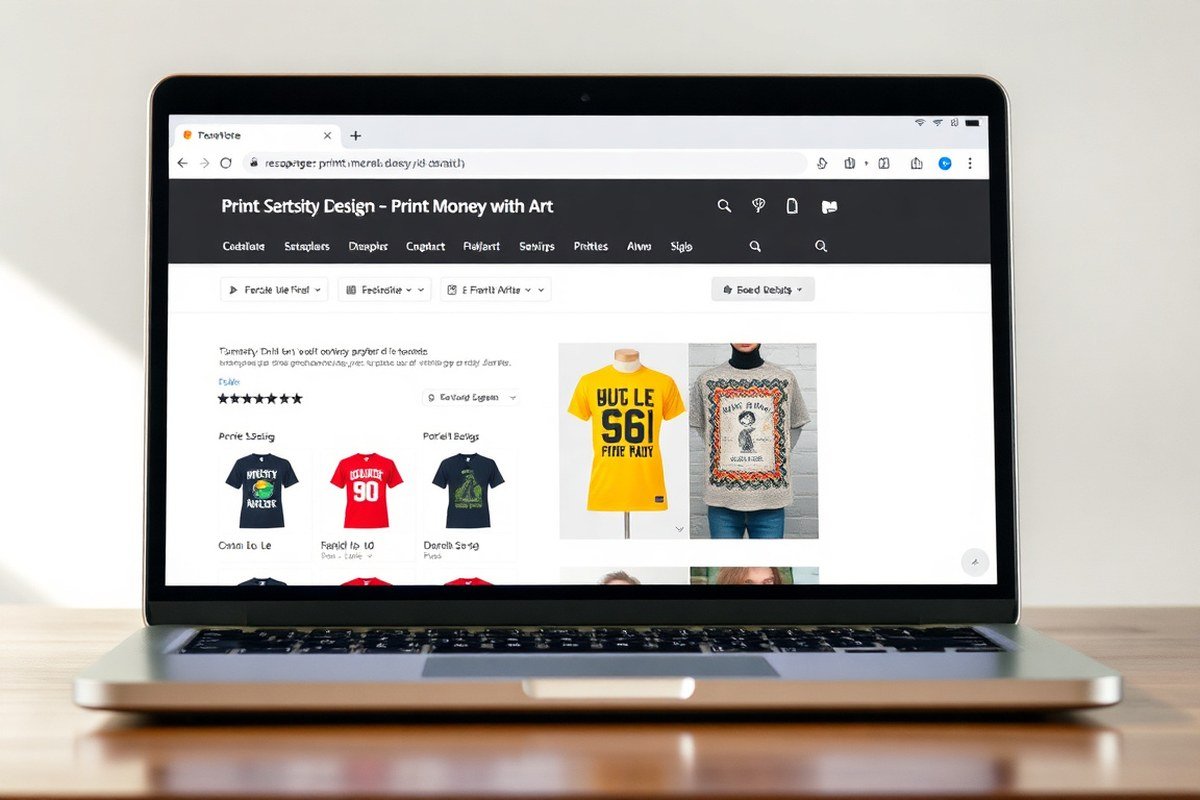
Print-on-demand (POD) services let you upload your art designs online. When customers order products like shirts, mugs, or phone cases featuring your art, the POD company prints and ships them directly. You earn a cut of each sale, creating passive income without managing inventory or shipping. Popular platforms include Printful, Society6, and Printify, each offering different product ranges, fees, and payouts.
| Platform | Product Range | Fees | Payout Structure |
|---|---|---|---|
| Printful | Clothing, home decor, accessories | No monthly fee; base product cost applies | You set retail price; profit = retail price, base cost |
| Society6 | Art prints, home goods, apparel | No fees; base price set by Society6 | Artist royalties: 10-30% on most items; 20% on art prints |
| Printify | Wide range including apparel and home items | No monthly fee; pay base product price to print provider | You set retail price; profit = retail price, base cost |
For example, if you sell a T-shirt for $25 on Printful where the base cost is $13, your profit is $12. Selling 50 T-shirts monthly yields $600 passive income. Starting with a few designs on multiple POD sites can grow revenue while you keep creating.
Licensing your art means giving brands permission to use your designs for a fee or royalty. These agreements often pay 5% to 15% of net sales or a flat license fee ranging from $500 up to $50,000 per deal, depending on usage and market reach. To find licensing opportunities, research companies aligned with your style and send a professional proposal.
An effective script to approach a licensor might say: “Hello, my name is [Your Name], and I’m an artist specializing in [style/theme]. I believe my artwork could improve your product line. I’d like to discuss possible licensing partnerships where you use my designs while I receive royalties. Could we arrange a call to explore options?”
Negotiations cover rights duration, territory, royalty rates, and product types. Protect yourself by using clear contracts and, when needed, consult a licensing attorney. Properly managed, licensing generates steady, passive income while expanding your art’s reach to new audiences.
3. Earn Steady Income from Commissions and Custom Work

Attracting commission clients starts with clear communication about your style, process, and pricing. Setting fair prices means factoring in materials, your time, and the complexity of the work. Artists often price commissions based on an hourly rate or a flat fee; setting an hourly rate between $25 and $75 is common, depending on your experience and demand. To protect both parties, use a simple Contract template that outlines the project scope, timeline, payment schedule, and usage rights. Include a 50% deposit upfront, with the balance due upon completion.
Managing client expectations helps avoid disputes over revisions or scope creep. Limit revisions to two rounds and specify extra charges for additional changes. Professionalism in communication and transparency about deadlines fosters trust and repeat business. Promoting your commission services through social media and existing networks expands your reach effectively by showing your work and gathering referrals. Follow these steps to attract and manage commission clients:
- Define your pricing structure, including hourly rate, material costs, and revision limits.
- Create a clear contract template featuring the project description, payment terms (50% deposit, final payment on delivery), timeline, and copyright/licensing terms.
- Promote your commissions through social media posts, stories, and relevant art groups to showcase your portfolio.
- Reach out to local interior designers and businesses who regularly seek custom art to build partnership opportunities.
- Set boundaries by communicating revision limits upfront and enforcing additional fees for extra work beyond the agreed scope.
- Collect deposits before starting and send progress updates to keep clients engaged and informed.
- Deliver the final piece on time and with all licensed rights clearly outlined in writing.
Platforms like Fiverr, Upwork, and DeviantArt help find clients actively seeking commissions online. Balancing steady commissioned work with your personal projects creates a reliable income stream that supports your art practice sustainably.
Sample Commission Contract Clause: “Client agrees to pay 50% deposit before work begins. Artist will complete the project by [date] with up to two rounds of revisions included. Additional revisions will incur a fee of $[amount] per revision. Upon final approval and full payment, client receives a license for personal use only.”
4. Build Income by Teaching and Creating Digital Products
Creating digital products and teaching art can generate steady income and expand your audience globally. Popular digital products include ebooks, printable art, clipart, design assets, and exclusive wallpapers that fans can purchase and download instantly. Online art courses or workshops allow you to teach everything from acrylic painting to digital illustration. Teaching not only fills income gaps during slow sales but also builds your reputation and sharpens your skills.
Start teaching by planning a clear course structure, focusing on your unique style or technique. Use platforms that match your goals and audience size. For example, Udemy and Skillshare reach wide audiences but take a cut of sales, while a personal website with Sensei LMS gives you more control but requires hosting and marketing. Patreon supports community-building with ongoing memberships, ideal for sharing regular tutorials or behind-the-scenes content.
| Platform | Best Use | Revenue Model | Control |
|---|---|---|---|
| YouTube | Free content, ad revenue, audience growth | Ads, sponsorships | High |
| Patreon | Subscriptions and exclusive content | Monthly membership fees | High |
| Udemy | Structured courses, large audience | Revenue share per sale | Low |
| Personal Website + Sensei LMS | Full course ownership and branding | Direct sales, no fees besides hosting | Very high |
Pricing digital art courses and products usually depends on complexity and length. Short tutorials or ebooks can range from $10 to $30, while full courses often sell between $50 and $200. Consider offering tiered pricing, such as basic access and premium content bundles. Make sure to research similar products on your chosen platform to set competitive prices. Here’s a checklist for launching a digital course:
- Define your target audience and course topic
- Outline lessons and create scripted content
- Record videos or prepare downloadable materials
- Choose the right platform based on control and audience
- Set your pricing strategically with options like bundles or memberships
- Promote your course using social media and email lists
- Collect feedback and update content regularly
Combining teaching with digital downloads creates multiple income channels. Watch for production quality, clear instructions, and responding to learner needs. Poor planning or unclear content can deter buyers, so invest time upfront to produce polished, valuable materials your audience will appreciate.
5. Use Social Media and Online Presence to Boost Sales
Instagram, TikTok, and Twitter rank among the best platforms for artists aiming to build an audience and sell art. Instagram suits visual storytelling with posts and stories, TikTok drives engagement through short videos like time-lapses or art challenges, and Twitter fosters interaction via updates and networking. Posting consistently matters, aim for 3 to 5 posts per week plus daily stories or short clips to keep your audience engaged without overwhelming them.
Creating a social media content calendar keeps your efforts organized. Schedule posts that showcase your process, finished pieces, and behind-the-scenes moments. Offer personal insights or art tips to add value. Tools like Buffer and Later help schedule posts ahead and automatically publish at optimal times, saving you time. For tracking engagement, platforms like Iconosquare or Instagram Insights give you data on which posts drive likes, comments, and shares, helping refine your strategy.
Turning followers into paying customers happens by building trust over time. Share occasional Direct calls to action such as limited-time offers or new product announcements in posts and stories. Link directly to your online store or portfolio in your bio and captions. Engaging with comments and DMs builds relationships and encourages commissions or sales. Combining social media with an email list lets you nurture leads more personally.
- Choose your platforms: Start with Instagram and TikTok, adding Twitter for networking and announcements.
- Create a weekly posting plan: Include 2 finished art posts, 2 process videos, and 1 personal story per week, plus daily short stories or clips.
- Use scheduling tools: Set up Buffer or Later accounts to plan posts a week in advance and post during peak engagement hours (typically 6-9 PM).
- Engage actively: Respond to comments and messages within 24 hours to build rapport and encourage followers to invest.
- Track your progress: Review analytics weekly using platform insights or Iconosquare to find your best-performing content.
- Incorporate sales prompts: Post at least one call to action or product promotion every 1 to 2 weeks, highlighting special offers or new work.
- Link strategically: Keep your bio updated with the latest store or portfolio link and mention it regularly in posts.
- Build an email list: Encourage followers to subscribe via social media, then send targeted offers to convert fans into clients.
6. Plan and Diversify Income Streams for Long-Term Success
Combining multiple income streams creates a resilient foundation for your art business. Use the Artist Cashflow Wheel™ to plan monthly income by mapping out at least 3 to 5 revenue sources that suit your style and schedule. For example, balance Custom commissions that take considerable time but pay well, with Print-on-demand products that generate passive income with less effort. Each stream has pros and cons: commissions offer high value but fluctuate, while passive sources require setup but pay continuously.
Track your income and expenses with simple tools like QuickBooks, FreshBooks, or even spreadsheets tailored to your business. Regularly update these to monitor cash flow, spot slow periods, and plan for expenses such as materials or marketing. The Artist Cashflow Wheel™ helps by visualizing when each stream tends to produce revenue, so you can avoid cash crunches and prepare for off-seasons.
Outsourcing tasks becomes worthwhile when the cost of your time exceeds what you earn on key creative work. For instance, hire an accountant if managing taxes or finances takes more than a few hours weekly, this protects you from costly mistakes and gives you time to focus on making art. Similarly, a virtual assistant or marketing consultant can handle routine tasks once your business grows. Use this simple decision rule: Outsource anything that slows your creative output or risks legal/financial trouble.
Common pitfalls include relying on a single income source and poor financial tracking. Avoid these by diversifying steadily instead of overextending yourself. Begin with a manageable mix, refine your plan quarterly, and adjust based on what works best artistically and financially. By keeping your income streams varied and organized, you build a sustainable art business that supports both creativity and steady cash flow across the year.
Your First 30 Days: A Quick-Start Plan
Start turning your art into income by following these focused steps. Each phase builds on the last to help you create and sell art products while expanding your reach.
- Day 1: Set up your online shop on a platform like Etsy or Shopify. List at least three original artworks or prints to build your initial portfolio. You’ll know it worked when your shop is live and visible to potential buyers.
- Week 1: Choose a print-on-demand service and upload your art for physical products like mugs or apparel. Confirm your designs appear correctly on products before promoting.
- Week 2: Reach out to three contacts or social media followers offering commission work. Track responses or requests as a sign of growing interest.
- Week 3: Create a simple art tutorial or digital product like a downloadable guide. Post it on your website or a marketplace. Check for initial downloads or inquiries.
- Week 4: Post daily on a chosen social media platform, sharing your creative process and products. Monitor engagement metrics such as likes, comments, or follows.
- After 4 weeks: Review which income streams generated sales or interest. Adjust effort toward the best performers and plan new content or products accordingly.
Frequently Asked Questions
What Are Some Ways to Make Money with Art Besides Selling Original Pieces?
You can create and sell ebooks, teach art classes, or start an art blog to monetize your expertise. Renting out your studio space or partnering with interior designers also adds income streams beyond direct art sales.
Can Renting Out Art Studio Space Generate Income?
Renting your art studio when not in use can earn you extra money. It makes use of an existing asset without extra work on your part.
How Can I Make Money by Working with Interior Designers?
Providing custom artwork for interior designers opens up a lucrative market. Your work gets featured in stylish spaces, increasing exposure and sales opportunities.
Why Is Starting an Art Blog Good for My Art Business?
An art blog helps drive traffic to your website and engages your audience. It creates additional income opportunities through ads, partnerships, or selling digital products.
Are Art Fairs a Good Alternative to Gallery Representation?
Yes, art fairs allow you to sell directly to buyers without gallery fees. This can yield more immediate income and better control over pricing.
The Bottom Line
Making money with art depends on consistent effort and diversifying how you sell your work. Begin by showcasing your art and gradually add new income streams as you learn what connects with your buyers. Start today by listing your first original pieces online to open the door to more sales and opportunities.