

How to Do Art Commissions: A Complete Guide to Pricing, Process & Profits
Knowing how to do art commissions means setting clear prices, managing client expectations, and securing payments upfront. Start by outlining your pricing based on the time and materials required, then require a deposit before starting work. This approach protects your income and keeps projects running smoothly.
Key Takeaways
- Charge by the hour or project complexity to match your skill and desired income, like $20/hour for detailed portraits.
- Request a 20% to 50% deposit upfront to cover initial costs and secure commitment from clients.
- Write clear agreements specifying deliverables, payment terms, and revision limits before starting.
- Use trusted payment platforms or services that minimize fees and offer payment protection, such as commissions.gg or Wise for international transfers.
- Create a portfolio showcasing different styles and commission examples to attract the right clients.
- Set realistic timelines and update clients regularly to avoid delays and frustration.
What Are Art Commissions and How Do They Work?

An art commission is a custom piece of artwork created specifically for a client based on their unique request. This process starts when a client approaches you to produce a particular style, subject, or design that fits their needs. The artwork can range from portraits, illustrations, and digital designs to murals, sculptures, or even commercial graphics, depending on your skills and what you offer. The key point is that the final product is tailored exactly to the client’s directions rather than an off-the-shelf piece.
The artist-client relationship in commissions is a collaborative, step-by-step process. First, you receive the client’s request, which should clearly outline their vision, including size, medium, style, and purpose. Next, you discuss details such as timeline, price, and any specific requirements. You may share sketches or drafts to confirm the direction, then move forward with creating the full artwork once the client approves. Regular updates or asking for feedback can help avoid misunderstandings. After completing the work, you deliver the piece as agreed and receive final payment, following any terms you set beforehand.
This arrangement matters because it protects both parties: you know what’s expected and get compensated fairly, while the client receives exactly what they want. Typical commissions often range in price depending on complexity, from $50 for a small, simple digital sketch up to several hundred or thousands for large, detailed paintings or commercial projects. Clear communication about scope and revisions early on will help avoid extra work or payment disputes. By understanding this process and setting proper expectations, you can build trust and repeat business from satisfied clients.
How to Price Your Art Commissions Fairly and Profitably
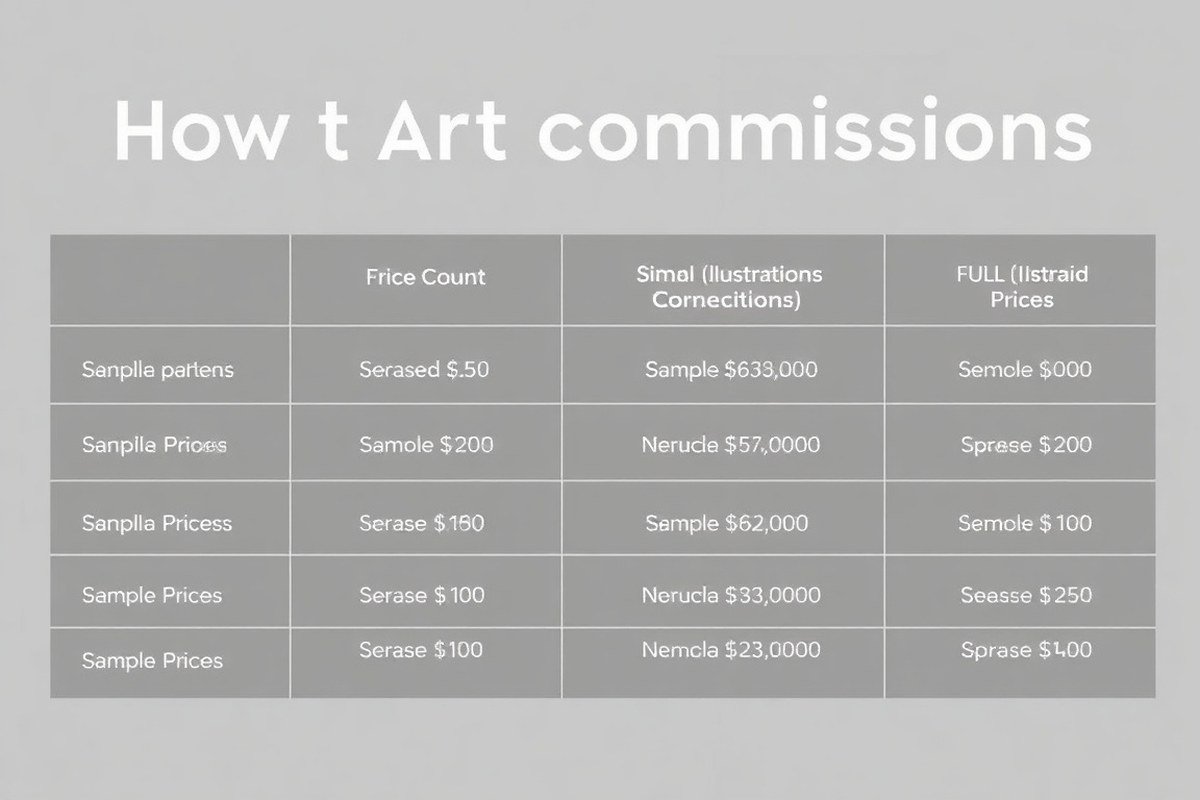
Calculating your fee starts with knowing your base rate, which could be hourly or a day rate like many professional illustrators use. For example, if you set $30 per hour and expect a detailed commission to take 10 hours, your base price would be $300. Add a markup, often 10-20%, to account for complexity and client management. Supplies costing $20 and including minor revisions works best by building those into your markup. Avoid offering unlimited changes, as they might lead to unpaid extra work.
Flat fees are common and preferred by many clients because they provide a clear total upfront. To decide your flat rate, estimate time, material costs, and difficulty, then add your markup. For example, pricing a character portrait: base time 8 hours at $30/hour = $240, supplies $15, plus 15% markup $38.25. Your flat rate would be about $293.25, rounded to a neat figure like $295.
Deposits protect your income and your time. Standard practice requires collecting 30-50% upfront. This deposit pays for your initial effort and the cost of materials. For the $295 commission, a 50% deposit means $147.50 before you start, with the balance paid on completion. Clearly state deposit terms and fees in your commission agreement to avoid misunderstandings.
When pricing complexity, factor in extra time and technical challenge. Complex backgrounds or additional characters increase hours and costs. Add a fee for extra revisions beyond 1-2 minor rounds, common included revisions, to prevent scope creep. Communicate these clearly to the client before work begins.
Here’s a decision rule: set your hourly rate, estimate hours, add supply costs, apply a markup, and decide deposit percentage. Write all in a simple contract. For example, if complexity doubles the time, double the estimate before markup. This method keeps pricing transparent and profitable while managing client expectations.
Crafting Clear Agreements and Managing Client Communication

Developing clear agreements starts by creating a detailed written contract that defines the project scope, payment schedule, deadlines, and ownership rights. Clearly state what you will provide, such as the quantity and format of final files or artwork, and specify if these include prints, digital usage, or commercial permissions. Outlining deadlines builds trust by showing the client when to expect drafts, approval phases, and final delivery dates.
Communicate the project scope clearly at the start by asking your client for a detailed brief with references and examples. Use that brief to create a summary section in your agreement that both parties sign off on. This summary should cover style, size, medium, and any specific elements the client wants. Clarify upfront how many revisions are included, typically, one to two rounds of minor changes. For added revisions or major changes after approvals, state your extra fees. For instance, “The first two revisions are included; additional revisions will be charged at $25 per revision.”
Handling client communication means staying professional and prompt. Respond quickly, acknowledge their requests, and confirm changes during the sketch phase since revisions are faster and cheaper then. Avoid scope creep by referring all out-of-scope requests back to the agreed terms, gently reminding clients of extra fees or timeline impacts. Use a simple script like, “Thanks for your feedback! Since this change is outside our original agreement, it would require an additional fee and extend our timeline. Let me know if you’d like to proceed with this.”
A checklist before starting a commission can include: client brief received and confirmed, contract signed with defined scope and revisions, agreed timeline with checkpoint dates, payment schedule acknowledged, and communication plan established for updates and approvals. This structure protects both you and your client, keeping projects on track while avoiding misunderstandings that slow down the creative process or cause disputes.
Setting Up Payments and Protecting Your Income
Secure payment handling protects your income and builds client trust. Always collect a Deposit before starting work, typically 30% to 50% of the total price. This deposit secures your initial time and materials, lowering risks if the client cancels. Ask clients to pay through platforms offering payment protection, like PayPal or Commissions.gg. PayPal releases funds instantly but be aware of their fees, which range from 2.9% plus $0.30 per transaction for domestic payments. Commissions.gg holds card payments securely until you and the client approve the work, cutting the risk of chargebacks.
International payments require careful handling of currency conversion and fees. Wise is a great choice here because it charges currency conversion fees from 0.5% to 1%, significantly less than most processors impose on cross-border transactions. This saves you and your client money compared to standard PayPal or credit card conversions. Always confirm the exact conversion rate and fees upfront. When dealing with international clients, clarify who covers these fees and specify this in your agreement to avoid confusion.
A simple payment schedule works best for commissions: take the deposit first, then update the client with progress previews, and request the final payment only after they approve the near-final artwork. Ship or deliver digital files only after confirming the final payment clears. This step avoids common pitfalls like chargebacks or clients disappearing after receiving art.
Be cautious with off-platform payments like direct bank transfers or Venmo, as they usually offer less protection. Use deposits cautiously, aiming for a higher amount or verifying the client’s identity with references or social profiles. For example, an artist working on Reddit commissions may ask for a 50% deposit via PayPal upfront and the remaining 50% before delivering full resolution files. Keeping all agreements and payment confirmations in writing helps manage disputes if they arise.
Building a Portfolio That Attracts Commission Clients
Your portfolio should include your best and most recent work that highlights the Styles and mediums you excel in. Include a mix of finished commissions and personal pieces that illustrate your capabilities. Showing a variety of work signals your flexibility, but keep a consistent look to make your style recognizable. For example, if you specialize in digital character portraits, add a few pieces that differ in mood or technique while sticking to your core style to attract a broader range of clients.
Organize your portfolio so clients can quickly see what you offer. Label each piece with a title, medium, and brief description that mentions if it was a commission and what the client requested. This transparency builds trust and shows you can meet specific needs. Avoid including early practice sketches that don’t reflect your current skill level, as these can confuse clients.
Sharing your portfolio strategically matters. Social media platforms like Instagram and TikTok are highly effective because they have built-in art communities and commission discussions. Post regularly using relevant hashtags and say plainly in your bio and posts that you’re accepting commissions. Platforms like Behance provide a professional setting for attracting serious clients and should be part of your online presence.
Joining art forums and communities where commissions are common helps you connect with potential clients and gather feedback on your portfolio. Once your portfolio is ready, promote it across your blog, posts, and art forums to increase visibility. Consistent marketing alongside updating your portfolio every few months with new commissioned work will keep your offerings fresh and attractive.
Managing Workflow and Timelines for Efficient Commission Delivery
Managing workflow and timelines starts with breaking down your commission into clear phases: concept sketch, client feedback, final line art, coloring, and finishing touches. A typical timeline varies by the type of art, simple digital portraits might take 1 to 3 days, whereas detailed illustrations or large-scale paintings often require 1 to 3 weeks. Tracking how long each stage takes builds your data for more accurate future estimates. Use a checklist to mark each step completed; this keeps the project visible and manageable.
Estimate your delivery date by adding up these phases with buffer days for unexpected delays or client revisions. For example, if sketching takes 2 days, coloring 3 days, and finishing 1 day, plan about 7 days total, including a 1-day buffer. Track your progress daily using a simple spreadsheet or app to compare planned versus actual time spent. This helps you identify stages where you fall behind early.
If you run behind schedule, communicate with your client immediately. Explain the reason, offer a revised timeline, and, if needed, provide options like shortening or simplifying the piece to meet the deadline. A reusable One-page commission agreement including deliverables and deadlines protects both you and the client by setting expectations clearly from the start.
Block out specific work periods on your calendar to avoid overbooking, and keep marketing or admin tasks to certain hours so they don’t eat into creation time. Effective time management preserves quality and reliability, helping you build a strong reputation for on-time delivery. Failing to plan leads to rushed work or missed promises, harming your client relationships and income.
Handling Revisions and Scope Changes Without Losing Money
Setting clear limits on revisions is essential to keep your art commissions profitable. Offering unlimited revisions often leads to excessive time spent for free; for example, a $120 commission can balloon into 14 hours of unpaid work when revisions go unchecked. Define a reasonable number of revisions, typically one to three, within your agreement to prevent scope creep and protect your time.
To handle extra requests beyond the agreed revisions professionally, communicate the cost clearly before starting any additional work. Charge a flat fee or an hourly rate for each extra revision. An hourly fee ranging from $20 to $50 is common, depending on your skill level and market. Charging transparently ensures clients understand the value of your time and discourages unnecessary changes.
You can use language like this in your communication to maintain professionalism: “Thank you for your feedback. I’m happy to make additional changes beyond the scope of our original agreement. Please note that these extra revisions will be billed at $30 per hour. Let me know how you’d like to proceed.” This approach sets boundaries without discouraging collaboration.
Here’s a simple script template for your commission agreement or initial message: “The commission price includes up to two revisions. Additional revisions will be billed at $25 each. Major changes after approval may require adjusting the deadline and pricing.” This script clarifies expectations upfront and provides a clear decision rule for clients.
Being upfront about revision limits and extra costs helps build trust and reduces disputes. You avoid working for free and keep your business sustainable. Without these limits, you risk losing money on commissions while clients may expect unlimited adjustments at no charge.
Recognizing Red Flags and Resolving Commission Problems
Common red flags in art commission requests include clients asking for free work samples, refusing to sign a simple contract, or unclear about payment terms. Be cautious if a client is vague about their project or wants a large amount of work done very quickly without a deposit. These signs often point to difficulties like late payments or disputes later.
Handling Late or missed payments starts with requiring a deposit before you begin any work, even for small commissions around $30. A typical deposit ranges from 25% to 50% of the total price, which helps cover materials and your time. Send polite reminders if the client misses a payment deadline, backed by your written agreement. Payments that keep coming late may require you to stop working until you get paid or think about ending the project.
When a client is Unhappy or abusive, first listen carefully and try to resolve the issue by referring to your contract terms about revisions and scope. Customers who get disrespectful or ask for extra work not agreed on without extra pay need a calm and clear response. You can use a message like: “I want to help you get the best result, but additional changes will require extra payment as outlined in our agreement.” If abuse persists, it’s okay to end the collaboration politely by explaining your reasons clearly and keeping records of all communication.
Protecting yourself means always having clear, written terms with your clients before starting, even if the commission is small. These terms should cover payment schedules, revision limits, cancellation policies, and ownership rights. This upfront effort reduces misunderstandings and makes it easier to enforce your rules if problems arise. The effort is minimal compared to the stress of chasing payments or dealing with unreasonable clients, and it shows professionalism that attracts respectful clients.
Your First 30 Days: A Quick-Start Plan for Art Commissions
Follow this plan to launch your art commissions with confidence and build momentum quickly.
- Day 1: Set up a clear commission agreement template covering pricing, payment, revisions, and timeline. Share it with a trusted friend or mentor for feedback to ensure it’s clear and fair.
- Day 3: Create at least three portfolio pieces that showcase different styles or subjects you want to offer in commissions. Post them to social media or a website and track engagement to see what attracts interest.
- Week 1: Announce your commission availability with examples, prices, and your agreement terms on your main online platforms. Monitor direct inquiries and messages to check that your communication is clear and professional.
- Week 2: Begin responding to potential clients promptly, sending your agreement and requesting a deposit before starting work. Ensure clients return signed agreements and deposits before proceeding.
- Week 3: Complete and deliver your first commissioned piece on or before the promised date, asking the client for feedback. A satisfied client response means you managed expectations well.
- Week 4: Review your pricing and workflow based on your first commissions and client feedback. Adjust prices or processes as needed to protect your income and improve efficiency.
Frequently Asked Questions
What Skills Help Improve Your Chances of Getting Art Commissions?
Having strong communication and time management skills helps you meet deadlines and understand client needs, which are key for successful art commissions.
Can Art Commissions Be Part of a Full-Time Art Career?
Yes, many artists turn commissions into full-time work by building steady client bases and managing their schedules efficiently.
How Can I Protect My Rights to My Artwork During Commissions?
Use written agreements specifying usage rights, and consider copyright registration for your original work to prevent unauthorized use.
Is It Necessary to Use an Art Commission Platform?
No, you can work independently with clients but using a platform can help find buyers and provide payment security.
How Do I Handle Client Dissatisfaction Professionally?
Stay calm, listen to their concerns, and offer reasonable revisions within your agreed terms to maintain a positive relationship.
Wrapping Up
Starting art commissions takes clear agreements, steady communication, and realistic pricing. Focus on delivering timely, quality work while protecting your creative time and income. Your next step is to reach out to at least one potential client today using your new agreement and pricing to gain practical experience.