
What Is Radial Balance in Art? A Complete Guide with Examples and Tips
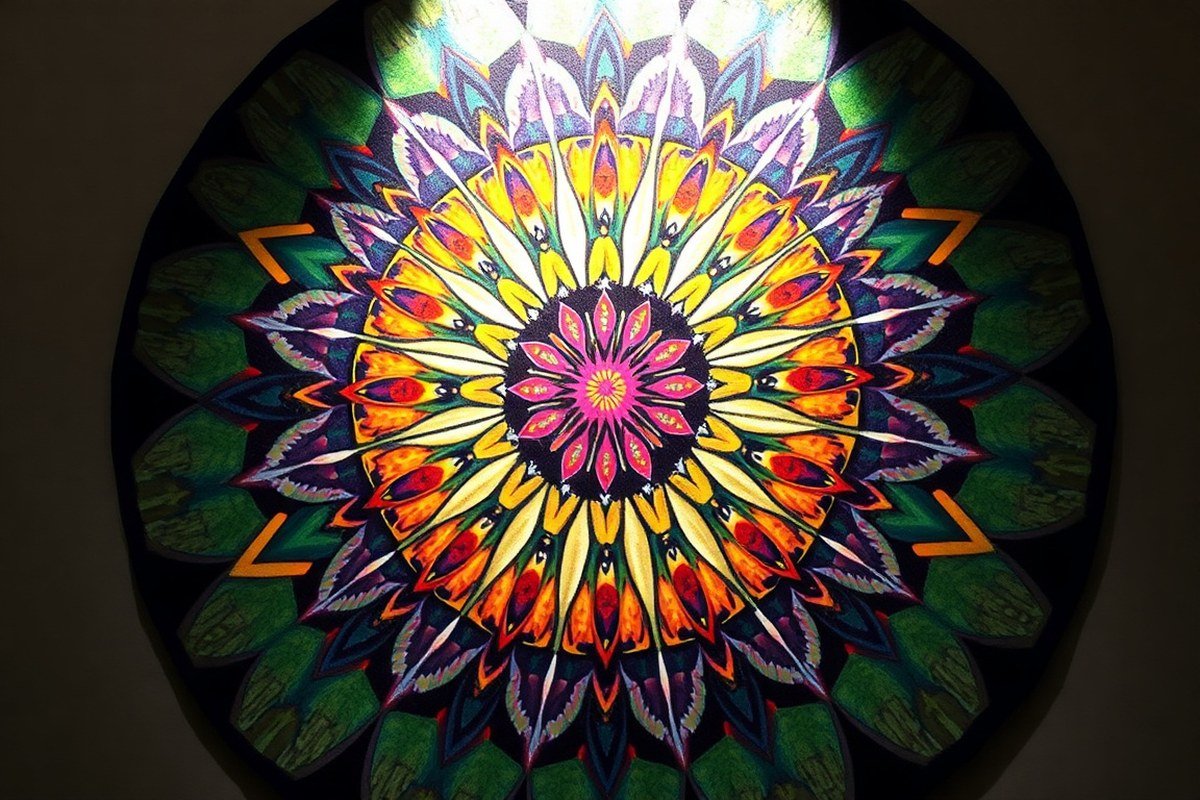
Radial balance in artwork organizes elements around a central point, producing a symmetrical circle that guides the viewer’s attention either toward or away from the middle. This method evenly distributes shapes or colors, fostering harmony and a clear point of focus. Start creating radial balance by identifying a dominant center that influences how you arrange other elements in your piece.
Key Takeaways
- Radial balance centers all visual elements around a single point for organized flow and unity.
- It differs from symmetrical balance by radiating elements outward rather than mirroring them across an axis.
- Common examples of radial balance appear in mandalas, rose windows, and circular earthenware like the Charles II Charger.
- Radial balance is visually appealing because it naturally guides the viewer’s eye around the artwork.
- Start with a clear, central anchor point to create effective radial balance in your composition.
- Avoid overcrowding the center to maintain clarity and keep the design balanced.
What Is Radial Balance and How Does It Work in Art?
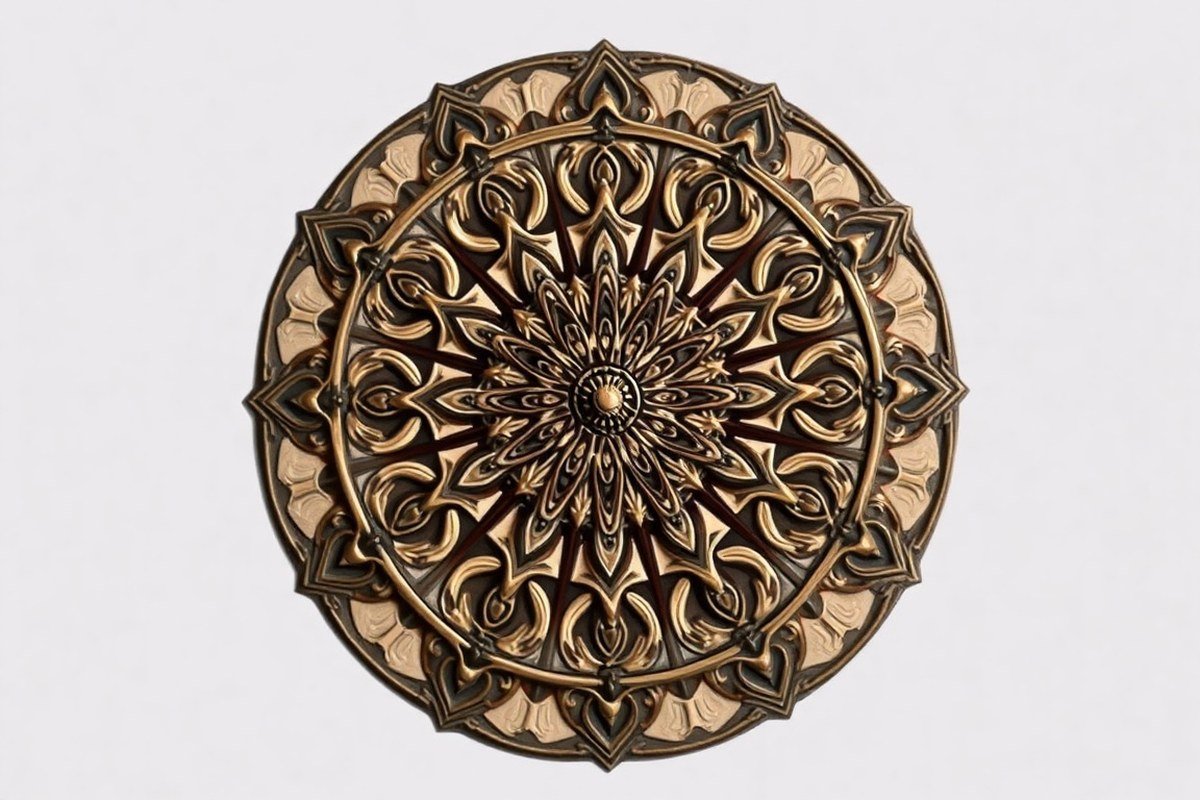
Radial balance is a type of visual symmetry where the elements of an artwork are arranged around a central point. You can think of it as shapes, colors, lines, or textures radiating outward in a circular or spiral pattern. This setup draws your eye naturally to the middle of the composition and then guides it outward along the evenly spaced elements. For example, the petals of a flower or the spokes of a wheel display radial balance because each segment spreads out evenly from their center.
The key to radial balance is its circular arrangement rather than mirroring across a line, which is what happens in traditional symmetry. Visual elements are positioned so they radiate out from a core point equally in all directions. This creates a pattern where every part relates directly back to that center, establishing Visual harmony and focus. Unlike asymmetrical balance, where dissimilar elements balance by weight, radial balance hinges on the equal distribution of elements around the center point to achieve balance.
To create radial balance in your artwork, start by identifying the central point that will serve as the anchor. Arrange your visual elements so each side of the circle or spiral mirrors the others in placement and size. This might involve repeating shapes or colors evenly around the focal point. The result should feel unified, with your viewer’s eye moving naturally from the center outward along the balanced segments. In practice, radial balance often adds a sense of calm and order, making your composition engaging without overcrowding or chaos.
How Is Radial Balance Different from Symmetrical and Asymmetrical Balance?
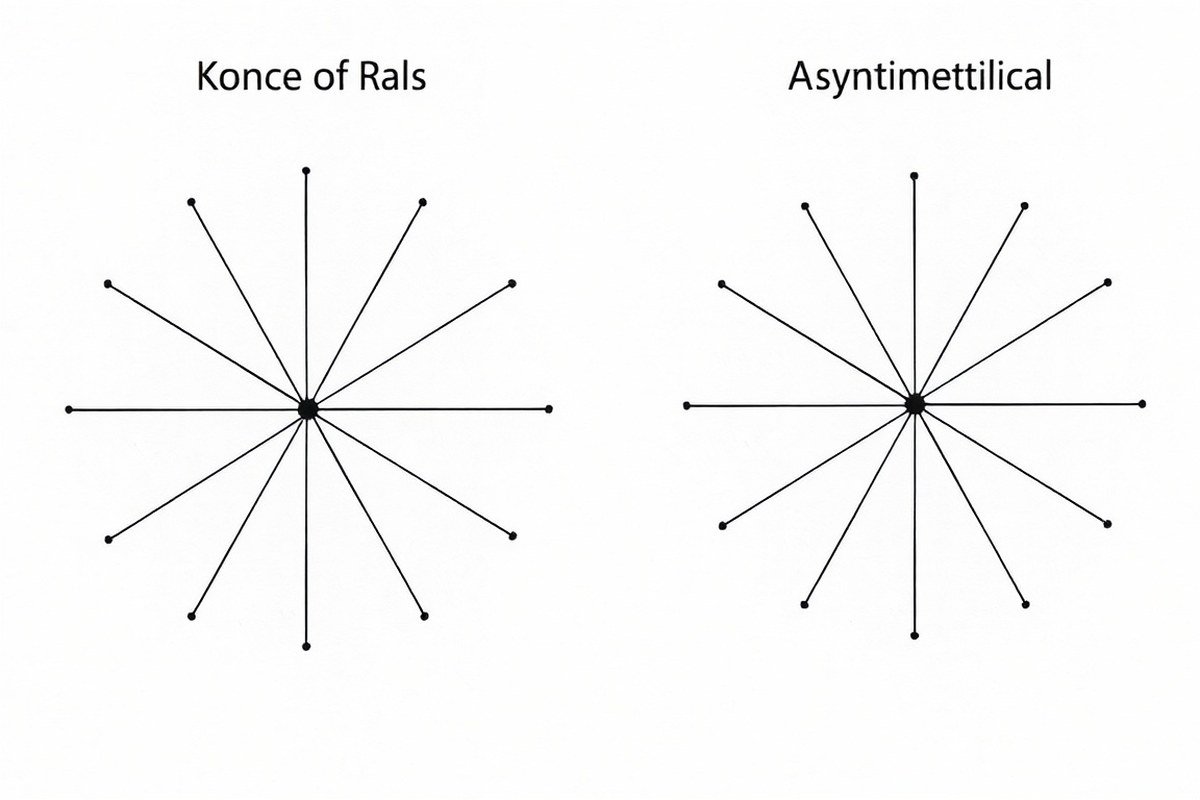
Artists use three key kinds of balance: symmetrical, asymmetrical, and radial balance. These methods help you create harmony and visual stability by arranging elements in unique patterns. Symmetrical balance places parts so one side mirrors the other or matches in size and shape. This style suits works needing a formal, steady impression, common in portraits, architecture, and logos. It’s easy to create but might come off as static or unchanging.
Asymmetrical balance, by contrast, balances elements of different sizes, shapes, or colors without mirroring. You create harmony by carefully distributing visual weight so the composition feels balanced overall, even if individual sides differ. This approach results in dynamic, interesting compositions and is popular in modern art and editorial design. It’s more challenging because you must constantly assess the entire piece to maintain balance.
Radial balance differs from both symmetrical and asymmetrical by arranging elements evenly around a central point. It often involves repeating forms or patterns radiating outward, like mandalas, floral designs, or circular logos. Although radial balance can be symmetrical, its uniqueness comes from its circular distribution rather than along a straight line. This type creates a natural sense of movement and focus and is effective when you want to draw attention to the center. It works well for designs that aim to feel harmonious and energetic but requires careful planning to keep elements evenly spaced around the center.
A simple comparison shows symmetrical balance centered on equal halves, asymmetrical on visual weight balance without equality, and radial on balance around a point. Symmetrical is easiest to create but can lack energy. Asymmetrical offers creative freedom but needs careful adjustment to avoid imbalance. Radial brings a unique circular focus but requires precision in layout to maintain harmony. Depending on your artistic goal, whether a formal, dynamic, or focused look, you’ll choose the balance type that best suits your project’s message and style.
Where Can You Find Radial Balance in Nature and Historical Art Examples?
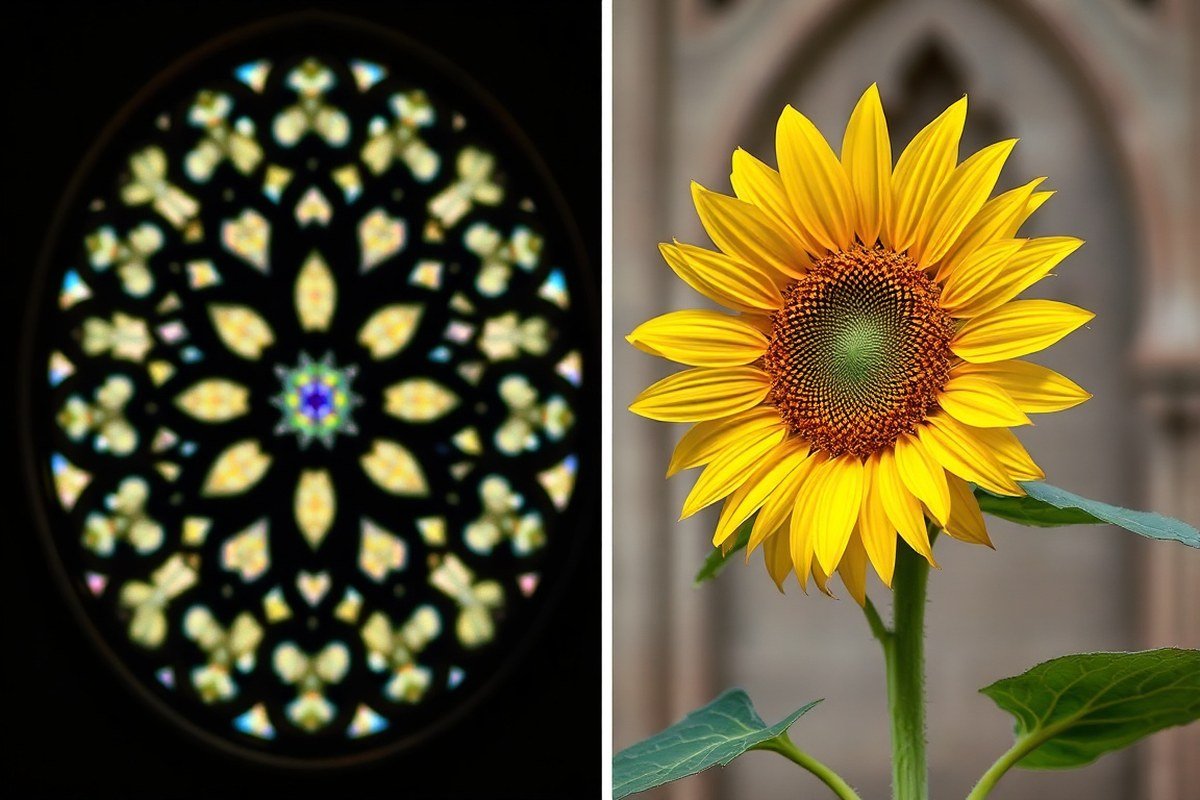
Radial balance appears frequently in nature, where structures radiate out from a central point to create harmony and equilibrium. Flowers like daisies and sunflowers exhibit radial symmetry with petals arranged evenly around the center. Sea creatures such as starfish and sea urchins display similar radial patterns through their arms or spines. Spider webs also form intricate radial designs expanding from the spider’s position.
In historical art, radial balance plays a significant role across cultures and styles. The Gothic rose windows of cathedrals feature up to 16 equal segments radiating from a central hub, combining both artistic beauty and spiritual symbolism. Mandalas in Hindu and Buddhist traditions use circular and radial patterns to represent the universe and one’s spiritual journey. The Charger of Charles II, a circular earthenware piece from about 1685, demonstrates radial art balance with designs emanating evenly from its center.
Architectural elements like domes, cupolas, and spires often use radial balance to focus attention and convey stability. Stone formations, such as Stonehenge, present radial layouts that harmonize form and function. Modern art embraces this principle as well; Robert Delaunay’s 1912-13 painting Le Premier Disque uses radial symmetry to guide the eye through vibrant color discs. Photographers capture radial balance in macro shots of flowers and in architectural images emphasizing circular staircases or wheel forms.
These natural and historical examples show how radial balance uses repeated, evenly spaced segments or shapes around a focal center. Creating effective radial compositions involves careful planning of equal divisions and aligning elements to radiate outward, offering viewers visual harmony and a strong central focal point. Radial balance is adaptable across various media, reflecting a universal aesthetic appeal grounded in natural forms and cultural symbolism.
Why Is Radial Balance Visually Appealing and Important in Art?
Radial balance attracts the viewer’s eye by creating a natural center point that everything else radiates from, making it intuitive to follow. This design principle uses elements arranged in a circular pattern around a central focal point, guiding the eye inward toward that spot. The visual flow established helps viewers focus immediately on the subject, which designers and artists achieve by centering the main element and using lines or shapes that lead toward it. This approach works because it mirrors patterns found in nature and human-made structures, which our brains find soothing and easy to process.
The harmony produced by radial balance comes from an even distribution of visual weight around the center, creating a sense of stability and unity. This balance is different from simple symmetry because it organizes elements in a way that feels both dynamic and orderly. Artists use this method to combine color, texture, and form in circles or spirals, which evokes a satisfying and harmonious feeling. The viewer experiences a cohesive composition where all parts relate back to the center, reducing visual tension and improving the overall impact.
Radial balance is especially effective for creating strong focal points. By repeating elements around a central hub, it makes the main subject stand out without overwhelming the viewer. For example, mandalas use intricate radial designs to maintain unity while drawing attention inward. Achieving this requires carefully setting a center and replicating shapes or lines that radiate outward. Adjusting the intensity of color or contrast near the center can further emphasize the focal point. Overusing radial elements or neglecting other design principles like color balance can weaken the effect, making the composition feel cluttered rather than cohesive.
What Practical Steps Help Artists Create Effective Radial Balance?
Start by choosing a clear central point on your canvas or workspace; this will be the focus where all elements radiate outward. Use a compass or any circular object to lightly sketch concentric circles around this point. These help you plan where to place shapes and lines evenly. Begin your initial sketch by drawing simple shapes, triangles, rectangles, or petals, that repeat around the central point to establish the radial pattern.
- Mark the exact center of your composition using a fine pencil or ruler.
- Draw evenly spaced guidelines radiating from the center like spokes on a wheel.
- Sketch repeating shapes along these guidelines to test balance and rhythm.
- Experiment with varying shape sizes and textures symmetrically placed around the center.
- Check your work from different angles and distances to ensure harmony.
- Use contrasting colors or shading selectively to emphasize the center or balance outer shapes.
- Finalize by cleaning guidelines and refining shapes while maintaining symmetry.
Good radial balance centers the viewer’s eye while creating a sense of unity and harmony. Avoid placing too much visual weight on one side or using irregular spacing between elements, as these disrupt the balance. For complex designs, digital tools like vector software can help measure angles and space precisely. Painting or drawing by hand often requires patience and multiple adjustments to perfect the radial flow. With practice, you’ll learn how to choose and repeat shapes that feel naturally balanced and visually appealing around the core focus.
What Are Common Mistakes and How Can You Fix Them When Working with Radial Balance?
Common mistakes with radial balance often stem from off-center focal points, uneven spacing of elements, and lack of clear direction in the design. Since radial balance relies on elements radiating symmetrically from a central hub, placing the focal point off-center can disrupt the harmony and confuse the viewer’s eye. Uneven or inconsistent elements can break the sense of equilibrium, making the composition feel cluttered or chaotic instead of balanced.
Fixing these errors requires a careful and methodical approach. Start by clearly establishing the central point and visualizing or marking where each element will radiate. Use tools like rulers, compasses, or digital grid guides to ensure equal spacing and symmetry. Check that the sizes and shapes of elements are proportional to maintain balance. Lighting and contrast adjustments can also help support the radial structure by drawing attention back to the center.
- Confirm the exact center using measurements or digital guides to avoid an off-center focal point.
- Evenly space elements around the central point to keep symmetry consistent.
- Maintain element size proportion to prevent overwhelming one side or direction.
- Use repeating shapes or lines radiating outward to reinforce the pattern.
- Apply lighting and contrast strategically to highlight the central focus and add depth.
- Avoid overcrowding that can distract from the radial flow and cause imbalance.
Different media may require tailored adjustments. For example, in painting, use a compass or a stencil to lay out radial guidelines, while in digital design, grid overlays assist with symmetry. Photographers can reposition the camera or adjust focus to center the main subject and arrange surrounding objects evenly. Good results feature a clear visual path leading inward to the center, with harmonious and balanced elements evenly dispersed in all directions.
How Is Radial Balance Applied Differently in Painting, Design, and Photography?
Radial balance appears differently in painting, design, and photography due to the unique tools and goals of each medium. In painting, radial balance often centers on the arrangement of elements like lines, shapes, and colors that radiate outward from a focal point. For example, a mandala or floral design employs repeated motifs in a circular pattern that draws the eye to the center, creating harmony. Achieving this requires careful composition planning and often layering with consistent spacing to maintain equilibrium.
Design uses radial balance to structure layouts and visuals that guide viewers through information. Graphic designers arrange text and images in circular or spiral formats for logos, posters, and websites. Combining radial balance with principles like proportion and emphasis ensures focal points stand out while the whole design feels unified. For instance, placing a logo at the center of radiating icons can provide visual stability while highlighting brand identity. This approach calls for digital tools to precisely align elements and adjust spacing for clarity.
Photography relies on camera settings and composition techniques to capture radial balance naturally or create it intentionally. Using wide-angle lenses or positioning the camera directly above symmetrical subjects like flower petals or architectural spirals emphasizes radial structure. Combining radial balance with depth of field can improve visual impact by clearly separating foreground and background elements. Photographers often seek natural patterns that radiate outward, adjusting aperture and shutter speed to sharpen details radiating from the center.
Across all three mediums, radial balance can be effectively combined with other principles such as symmetry and emphasis. For example, a painting may use symmetrical radial layout but emphasize a brightly colored center for dominance. Designers might blend radial balance with contrast to create dynamic, yet balanced visuals. In photography, radial balance combined with leading lines directs the viewer’s gaze smoothly. Mastering these combinations demands practice and attention to how visual weight distributes in the composition, ensuring the work feels both stable and engaging.
Step-by-Step Action Plan to Master Radial Balance in Your Art
Start applying radial balance with clear steps to see it in action and improve your compositions.
- Before you start: Choose a central point in your canvas or workspace. This will be the anchor for the radial elements and helps keep your design organized.
- Day 1: Sketch out basic radial shapes like circles or spirals around the center. Confirm balance by checking that elements repeat evenly in a circle or pattern.
- Week 1: Add details symmetrically around each radial segment. Check your work by turning the piece or mirroring sections to see if balance holds.
- After 2 weeks: Experiment with varying colors, sizes, and textures radiating from the center. Ensure visual weight remains steady and doesn’t pull focus unevenly.
- Week 3: Try applying radial balance in different formats like painting, digital design, or photography layouts. Evaluate how the balance changes with each medium.
- After 4 weeks: Review your work or get feedback to spot common issues like uneven spacing or disrupted flow. Adjust your elements for a consistent radial effect.
- Ongoing practice: Study nature and historical artworks with radial balance to inspire fresh ideas. Try replicating key features to deepen your understanding.
Frequently Asked Questions
What Is an Example of Radial Balance in Modern Art?
Robert Delaunay’s 1912-13 painting Le Premier Disque is a well-known example using radial symmetry around a circular central point.
How Do Mandalas Use Radial Balance?
Mandalas employ radial balance by organizing intricate designs symmetrically around a central point, creating harmony and visual unity.
Can Radial Balance Be Found in Photography Composition?
Yes, photographers use radial balance to draw attention to a center by arranging elements that spread outward evenly.
What Role Does Radial Balance Play in Spiritual Art?
Radial balance in spiritual art, like mandalas, symbolizes unity and balance, improving meditative focus.
Is Radial Balance Suitable for Abstract Art Styles?
Radial balance works well in abstract art, giving structure to otherwise free-form designs.
The Bottom Line
Radial balance focuses attention by organizing elements evenly around a center point. You can use it to create harmony and structure across different art forms. Start by picking a clear center and building out consistent shapes or lines, then refine details for better flow. Try sketching a simple radial design today to notice how balance shapes your visual impact.