
What Is the Deadliest Martial Art? Top 7 Explained with Clear Comparisons
What is the deadliest martial art depends on factors like effectiveness, lethality, and context of use. No single martial art holds this title universally, but systems such as Kalaripayattu, Silat, and Brazilian Jiu-Jitsu are often considered among the deadliest due to their focus on disabling opponents quickly. The key lies in combining skill, training duration, and real-world application for true deadliness. Start by focusing on martial arts that emphasize practical combat techniques and consistent training, as proficiency directly increases your effectiveness in self-defense or combat situations.
Key Takeaways
- Kalaripayattu is one of the oldest and deadliest martial arts, with origins over 3,000 years ago in India.
- Silat, from Southeast Asia, specializes in quick, debilitating strikes to neutralize opponents rapidly.
- Brazilian Jiu-Jitsu becomes deadly on the ground with 2, 3 years of training, mastering joint manipulation and submissions.
- Effective deadliness depends heavily on training duration; BJJ black belts typically require over 10 years of practice.
- Martial arts with striking focus like Muay Thai prioritize powerful, fast strikes designed to incapacitate opponents swiftly.
- Boxing, despite its sport status, has recorded significant fatalities, showing striking arts can be deadly in real combat.
Which Martial Art Is the Deadliest and Why?
Determining the deadliest martial art depends heavily on factors such as the effectiveness of its techniques, historical combat success, and the philosophy behind its training methods. Martial arts like Krav Maga emphasize rapid neutralization of threats, using straightforward, no-nonsense tactics designed specifically for survival in real-world violence. This approach makes it highly lethal because it focuses on disabling aggressors quickly using strikes to vulnerable areas rather than complex, flashy moves.
Other arts earn their deadly reputation through proven combat effectiveness over centuries. Muay Thai, for example, delivers powerful punches, elbows, knees, and kicks that can cause severe damage, combining speed and force in a way that’s respected worldwide. Brazilian Jiu-Jitsu (BJJ) exploits use and submissions to control and incapacitate opponents, often outweighing opponents physically stronger or larger. Its ground-fighting techniques have drastically changed modern combat scenarios, especially in mixed martial arts.
Effective martial arts also feature a coherent training system with clearly identified methods. Wrestling’s place among the deadliest martial arts comes from its real historical effectiveness and control in combat through takedowns and holds. Similarly, Silat’s combination of strikes, joint manipulations, and weapon techniques delivers a complete, dangerous combat style, tailored for life-or-death scenarios.
What makes an art deadly lies not only in its techniques but also its training methods. Arts that train practitioners to act quickly, efficiently, and with precision, like Krav Maga or Muay Thai, often outperform those focusing exclusively on traditional forms or sport competition. These martial arts cost time, discipline, and often require rigorous drills to develop the required speed and accuracy. Without this focused approach, practitioners may not achieve the real-world effectiveness necessary for an art to be truly deadly.
Top 7 Deadliest Martial Arts Compared in One Table
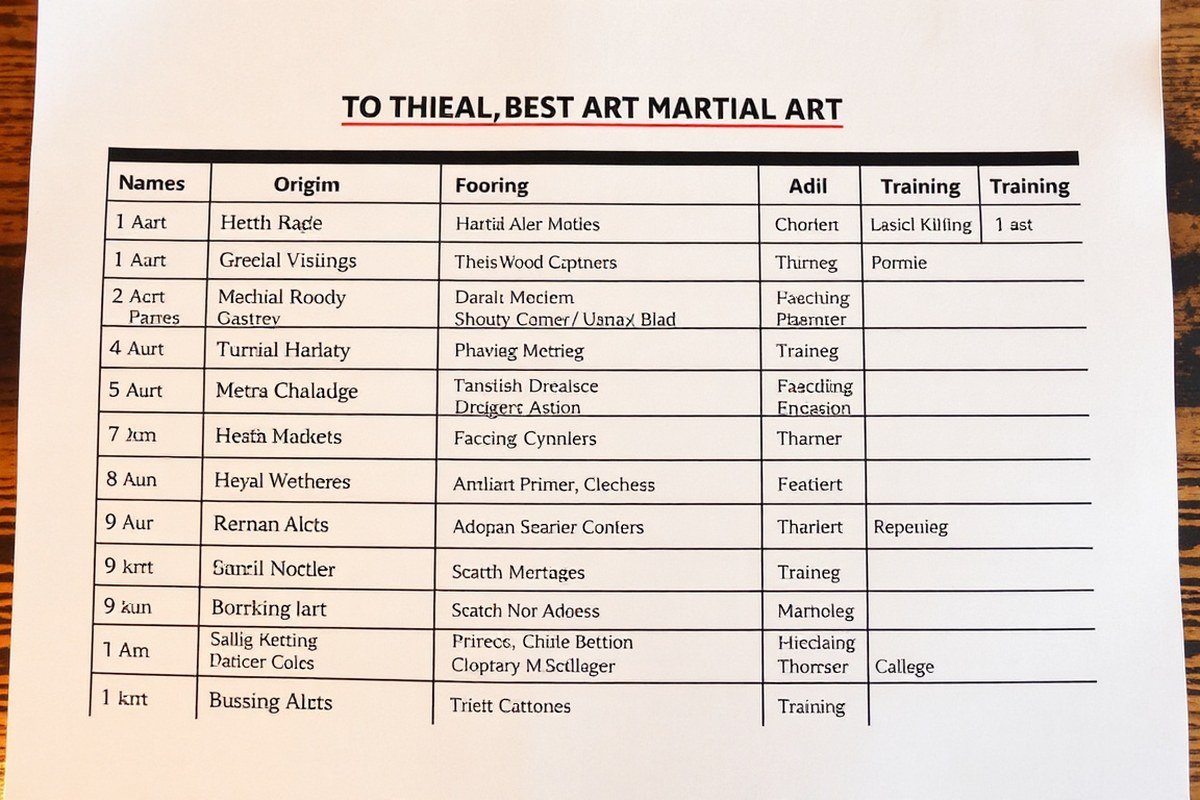
| Martial Art | Origin | Main Techniques | Training Time to Proficiency | Combat Focus |
|---|---|---|---|---|
| Mixed Martial Arts (MMA) | Global (Modern) | Striking, grappling, submissions | 3, 5 years for competition-ready skills | Real combat, versatile self-defense |
| Muay Thai | Thailand | Striking with fists, elbows, knees, shins | 2, 4 years for solid proficiency | Striking and clinching in combat |
| Combat Sambo | Russia | Striking, grappling, submissions | 3, 6 years including conditioning | Military combat and self-defense |
| Brazilian Jiu-Jitsu (BJJ) | Brazil | Grappling, submissions, joint locks | 4, 6 years to black belt level | Ground fighting and self-defense |
| Krav Maga | Israel | Striking, grappling, weapons defense | 1, 3 years for practical self-defense | Real-world street defense |
| Boxing | United Kingdom | Striking with fists, footwork | 2, 4 years to reach competitive level | Power and precision striking |
| Wing Chun | China | Close-range striking, trapping | 3, 5 years to develop skill | Efficient and practical close combat |
These seven martial arts are widely recognized for their effectiveness in real combat scenarios. MMA combines striking and grappling, requiring years of cross-disciplinary training to master. Muay Thai focuses on powerful striking techniques using all limbs, developing strength, speed, and endurance within a few years of training. Combat Sambo integrates striking and grappling but demands significant physical conditioning due to its military origins.
Brazilian Jiu-Jitsu emphasizes ground fighting through use and submissions, with a longer path to proficiency. Krav Maga trains you in practical self-defense that includes weapons defense, often readying practitioners in as little as one to three years. Boxing hones your punching precision and footwork to deliver knockout power fairly quickly. Wing Chun offers close-range combat techniques focusing on quick, efficient strikes and trapping, ideal for confined spaces.
Striking arts like Muay Thai, Boxing, and Wing Chun emphasize stand-up combat. Grappling arts such as Brazilian Jiu-Jitsu specialize in controlling opponents on the ground. Combat Sambo and MMA combine both, adapting to varied situations. Krav Maga adds real-world applicability by incorporating defense against weapons as well as strikes and grapples. Your choice depends on how quickly you need practical skills, the type of combat you expect, and the balance of techniques you want to master.
How Training Duration and Proficiency Affect Deadliness
Achieving proficiency in deadly martial arts typically requires consistent training over several years, with real combat effectiveness often developing after at least three to five years. The Duration of training directly influences your ability to apply techniques under pressure, especially in arts like MMA, Krav Maga, or Combat Sambo where sparring and live drills form the core of skill-building. Regular sparring helps you experience the timing, distance, and unpredictability of actual fights, which is critical for turning theoretical knowledge into deadly proficiency.
Early training usually focuses on mastering fundamentals, striking, defending, and basic grappling. As you advance, training intensifies with realistic scenarios and controlled sparring that simulate self-defense or street-fight situations. For example, martial artists practicing Brazilian Jiu-Jitsu or Muay Thai will spend the first couple of years developing muscle memory and conditioning before effectively using submissions or strikes in a high-stakes environment.
Proficiency impacts lethality by improving reaction time, precision, and adaptability. Someone trained thoroughly in Krav Maga can incapacitate an attacker quickly because the techniques are geared for efficient, practical self-defense requiring fewer moves. However, it takes months of disciplined practice to reach the point where instinct overrides hesitation. For beginners, lack of sparring or stress testing means their skill may not translate into real-life effectiveness, despite technical knowledge.
Committing to steady, progressive training and participating in competitive or simulated combat accelerates your journey to becoming deadly. The cost includes time, effort, and sometimes risk of injury, but these elements build the toughness and decision-making needed. Certain arts like Shaolin Kung Fu or Kalaripayattu may emphasize traditional forms initially, which might delay combat readiness but build foundational strength and coordination important to their style’s lethality.
The Role of MMA and Modern Combat in Defining Deadliness
Mixed Martial Arts (MMA) serves as a practical benchmark for determining martial arts effectiveness and perceived deadliness because it combines techniques from multiple disciplines in a real, competitive environment. The sport tests how well different martial arts hold up when applied against diverse fighting styles under timed rounds and strict rules. MMA’s evolution since the 1990s has brought arts like wrestling, Brazilian Jiu-Jitsu, Muay Thai, boxing, Sambo, and judo to the forefront based on their consistent success in competition.
The reason MMA matters in judging deadliness is its emphasis on effectiveness under pressure, with practitioners constantly refining their skills to overcome a wide range of opponents. Styles featured prominently in MMA, such as wrestling and Brazilian Jiu-Jitsu, demonstrate superior control, submission, and striking abilities that translate well into real combat scenarios. This constant cross-testing of techniques reveals which arts offer practical tools rather than relying on tradition or theory alone.
To assess deadliness within MMA, watch how styles perform in high-level matches such as those in the Ultimate Fighting Championship (UFC). Success involves effective striking, grappling, and transitions, typically combining stand-up striking arts like Muay Thai and boxing with ground control from wrestling or judo. Combat Sambo, noted for its balance of striking and grappling, also ranks high due to demonstrated wins in MMA. Evaluating martial arts through such live competition provides clear feedback on what techniques work under stress and which do not.
Understanding MMA’s role also means recognizing its limitations: it operates within rules and weight classes that moderate risk, and training time to reach mastery varies from years to decades. Those arts that fail to adapt to the mixed aspects of combat or prove ineffective against multiple threats tend to be excluded or seen as less deadly. For those seeking a martial art with confirmed real-world impact, choosing disciplines known for MMA success offers a concrete starting point backed by fight records and evolving strategy.
Debunking Common Myths About Deadly Martial Arts
Deadly martial arts often face misunderstandings that affect how you see their effectiveness and risks. One myth is that all traditional arts like Karate and Kung Fu are safe and non-lethal because they focus on discipline and form. While many traditional martial arts emphasize controlled practice and mental focus, some have deadly techniques when applied with full intent and proficiency. However, many traditional styles lack intense sparring and realistic combat training, which limits their deadliness in real fights.
Another common misconception claims bigger fighters automatically dominate smaller opponents. Size and strength help but don’t guarantee victory. Martial arts that train mental speed, precise targeting, and technique, such as Wing Chun, which combines self-defense with quick, focused strikes, demonstrate that smaller, skilled practitioners can defeat larger foes effectively. The mental and technical aspects often outweigh pure physical attributes in life-or-death situations.
Deadliness in martial arts also extends beyond physical confrontation. Arts like Sambo, Krav Maga, and Muay Thai combine physical skills with psychological readiness and tactical thinking. Mastering a martial art means developing awareness, timing, and the ability to neutralize threats quickly, these aren’t just brute force but strategic responses that reduce harm or end fights swiftly.
Understanding these facts matters because training in a deadly martial art requires more than memorizing moves. It demands disciplined practice under realistic conditions, regular sparring, and mental conditioning. Without these, techniques can be less effective, and practitioners may fail in high-stress situations. Conversely, well-rounded training builds confidence and real-world survival skills, regardless of your size or style.
How Culture, History, and Geography Shape Deadly Martial Arts
Krav Maga developed in Israel as a practical response to real-life combat and urban threats faced by military and civilian populations. Its origins in a volatile environment shaped its brutal efficiency, focusing on neutralizing armed attackers with quick, lethal strikes and disarms. The style is less about tradition and more about survival, emphasizing instinctive movements and targeting vulnerable points. Because it was created for life-or-death confrontations, it prioritizes techniques that can end a fight immediately, including strikes to important areas and weapon defenses.
Silat originates from Southeast Asia, particularly Indonesia and Malaysia, where the geography of dense jungles influenced its development. The martial art emphasizes rapid, close-range strikes aimed at critical areas like the throat and eyes, designed for swift incapacitation. Cultural factors also shaped Silat’s fluid and deceptive movements, allowing practitioners to blend attacks with defensive maneuvers suited to unpredictable environments. Its buried history in tribal warfare and self-defense adds to its reputation for lethal effectiveness.
Kalaripayattu traces back to the Indian subcontinent and is often considered one of the oldest martial arts. It blends strikes, joint manipulation, weapon drills, and healing techniques, reflecting the balancing of physical combat and health practices in ancient Indian culture. Geography played a role, with training traditionally adapted to varying terrains like open fields and forested areas. Its combination of agility and precision strikes reflects historical battlefield requirements where fighters needed a diverse skill set to survive.
Geographical and cultural contexts affect combat styles by dictating which techniques endure and thrive. For example, harsh environments may demand quicker, more direct attacks to minimize exposure, as seen in Krav Maga and Silat. Societies engaged in constant warfare tend to develop martial arts with lethal applications, designed for efficiency rather than sport. Understanding a martial art’s history clarifies why some prioritize speed and important point strikes while others preserve complex rituals or health elements, ultimately influencing how deadly they are in real combat situations.
Choosing the Right Deadly Martial Art for Your Goals
Choosing the right deadly martial art starts by clarifying your goals. Think about why you want to learn a martial art: Is it for self-defense, fitness, competition, or professional use like military or law enforcement? A martial art like Krav Maga or Jeet Kune Do focuses on practical self-defense with efficient, deadly techniques, suitable if quick effectiveness is your priority. On the other hand, if fitness and sport are more important, Muay Thai combines brutal striking with athletic conditioning but usually requires more training time to reach high proficiency.
Next, assess your current fitness level and the time you can commit to training. Martial arts that rely heavily on power kicks, like Taekwondo or Kickboxing, need strong leg muscles and flexibility, which might take months of conditioning. Wrestling and Boxing typically build practical effectiveness within 6 to 12 months of consistent training, offering a quicker path to self-defense skills. Remember, deadliness depends not just on the art but how well you train and adapt the techniques under pressure.
Match your personal values and local availability when choosing. Some deadly arts have strict competitive rules, while others remain more practical and unregulated. Availability affects how easily you find qualified instructors and training partners, which can save months or years in your learning curve. To measure deadliness realistically, consider both the martial art’s proven effectiveness by professionals and how well the training prepares you for real-world scenarios.
Use this checklist: Define your primary goal (self-defense, fitness, competition), evaluate your current fitness and willingness to train regularly, check availability of quality schools nearby, and research the martial art’s track record for effectiveness and real-world applications. Adjust your choice as you learn more and your needs evolve. Choosing a deadly martial art is a balance between your goals, commitment, physical condition, and the art’s practicality.
Your First 30 Days: A Quick-Start Plan to Training a Deadly Martial Art
Starting training in a deadly martial art takes focus and consistency to build effective skills. Follow these steps to begin your journey and track your progress.
- Before You Start: Choose a martial art aligned with your goals, whether self-defense, competition, or fitness. Research local schools and read reviews to ensure qualified instructors.
- Week 1: Attend your first beginner class focusing on basics like stance, strikes, and movement. Gauge your comfort by how well you follow instructors and perform foundational drills.
- Week 2: Practice key techniques outside class for 15 minutes daily. Check your progress by noticing improved coordination and muscle memory during training.
- Week 3: Begin light sparring or controlled drills to apply techniques under pressure. Track your readiness by your ability to stay calm and use learned moves effectively.
- Week 4: Evaluate your physical conditioning and flexibility. Add strength or cardio exercises to support your martial arts training if needed.
- After 1 Month: Discuss your performance with your instructor to identify strengths and areas to improve. Adjust your training focus based on that feedback.
- Ongoing: Maintain consistent training and gradually increase intensity and complexity. Progress shows when your techniques become smoother and more instinctive.
Frequently Asked Questions
What Makes Krav Maga the Deadliest Martial Art?
Krav Maga is the deadliest because it focuses on real-life self-defense techniques designed to neutralize threats quickly and effectively, often in military situations. Its practical approach prioritizes survival over sport or tradition.
Is Silat Considered the Deadliest Martial Art Worldwide?
Silat’s deadliness is debated, with no consensus among experts due to its varied techniques and regional styles. It remains powerful but less universally recognized as the deadliest.
How Does Training Duration Impact Martial Art Effectiveness in Self-Defense?
Longer training generally improves skill and reaction, but effectiveness depends more on quality instruction and realistic practice than hours alone. Consistency is key.
Can Mixed Martial Arts (MMA) Be Classified as the Deadliest Martial Art?
MMA is often seen as deadly due to its blend of striking and grappling from diverse disciplines, making fighters versatile in combat. However, it also emphasizes sport rules.
Why Is Taekwondo Ranked 12th on the Deadliest Martial Arts List?
Taekwondo ranks 12th because it focuses mainly on high kicks and speed, which are less practical for lethal self-defense compared to more combative arts.
Key Points to Remember
Deadliest martial arts combine effective techniques with practical training that suits your needs and body type. Regular practice and honest assessment help develop real skill and confidence. Start with one focused goal and commit to steady progress, and you’ll build a martial art practice that’s powerful and personal.