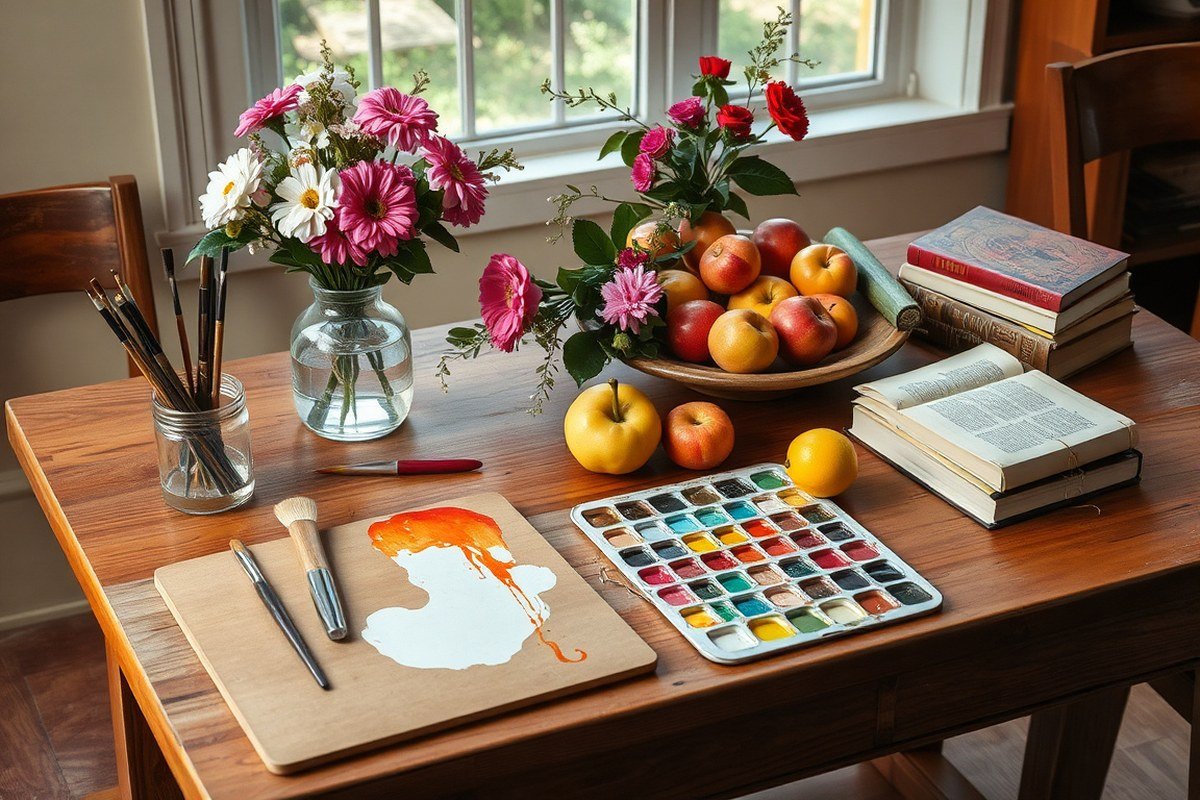
What Is Still Life Art? A Complete Guide to Its History, Styles, and Meaning
What is still life art? It is a genre of painting and other visual art forms that depict inanimate objects, often arranged on a surface. These objects, such as fruits, flowers, or household items, are carefully composed to highlight shape, color, and texture. Start by focusing on everyday items to explore their artistic potential and deepen your appreciation for their visual qualities.
Key Takeaways
- Still life art originated in ancient Egyptian and Roman art but became a distinct genre in the Renaissance.
- It gained major popularity in the 1600s, especially in the Netherlands and Spanish Netherlands.
- Vanitas still life paintings use symbols like skulls and wilting flowers to represent mortality and life’s impermanence.
- Objects such as peeled lemons and oysters often symbolize luxury and the fleeting nature of pleasure.
- Famous still life painters include 17th-century Dutch artists and 20th-century Italian Giorgio Morandi.
- Arranging three meaningful objects can be a good starting point for creating your own still life art.
What Is Still Life Art and How Is It Defined?
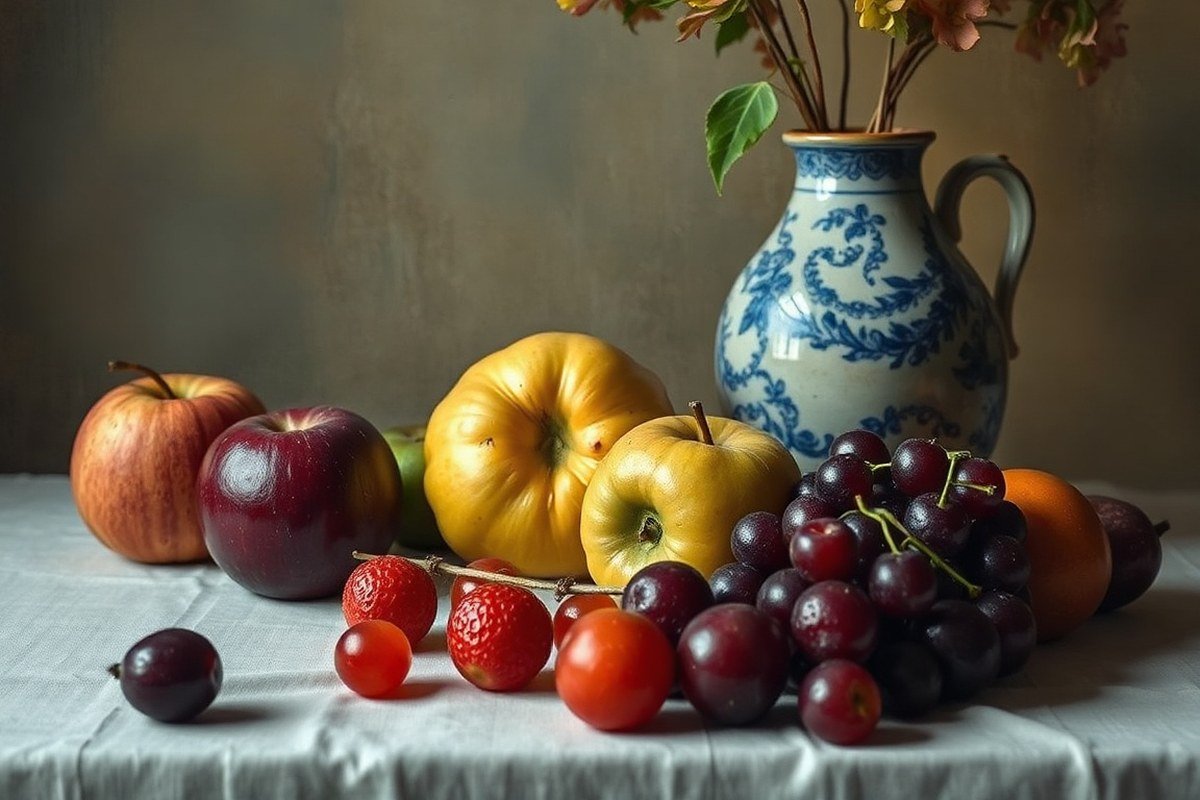
Still life art is a genre focused on depicting inanimate objects, both natural and man-made, arranged thoughtfully by the artist. Common subjects include fruit, flowers, vessels like bowls or baskets, books, and sometimes everyday items such as pipes or coins. This art form captures objects that don’t move or tell a story through human or animal presence, allowing artists to concentrate fully on composition, color, lighting, and texture.
Unlike portrait or landscape art, which center on living beings or outdoor scenes, still life art isolates objects to highlight their shapes, surfaces, and relationships within a carefully controlled space. This creates a quiet, focused framework that invites close observation and artistic interpretation. For example, a still life painting might explore how light glints off a glass vase or how the curves of fruit stack against a wooden table. The arrangement is key, as it guides the viewer’s eye and balances the composition.
The uniqueness of still life lies in its flexibility and detail-oriented approach. Artists can experiment with varied textures, nuanced shadows, and symbolic meanings, like 17th-century vanitas paintings that used objects such as skulls and wilting flowers to comment on mortality. Producing strong results requires attention to proportion, shading, and the spatial relationship between objects. Careful lighting and an intentional setup usually take several hours to arrange before painting or drawing begins. On the downside, a poorly planned still life can feel static or cluttered if objects lack harmony or clear focus.
In summary, still life art captures the beauty and complexity of objects themselves, setting it apart from other genres by focusing solely on lifeless subjects, their arrangement, and artistic portrayal. This focus lets you explore form and meaning through everyday items arranged with purpose and care.
The History and Evolution of Still Life Through the Ages
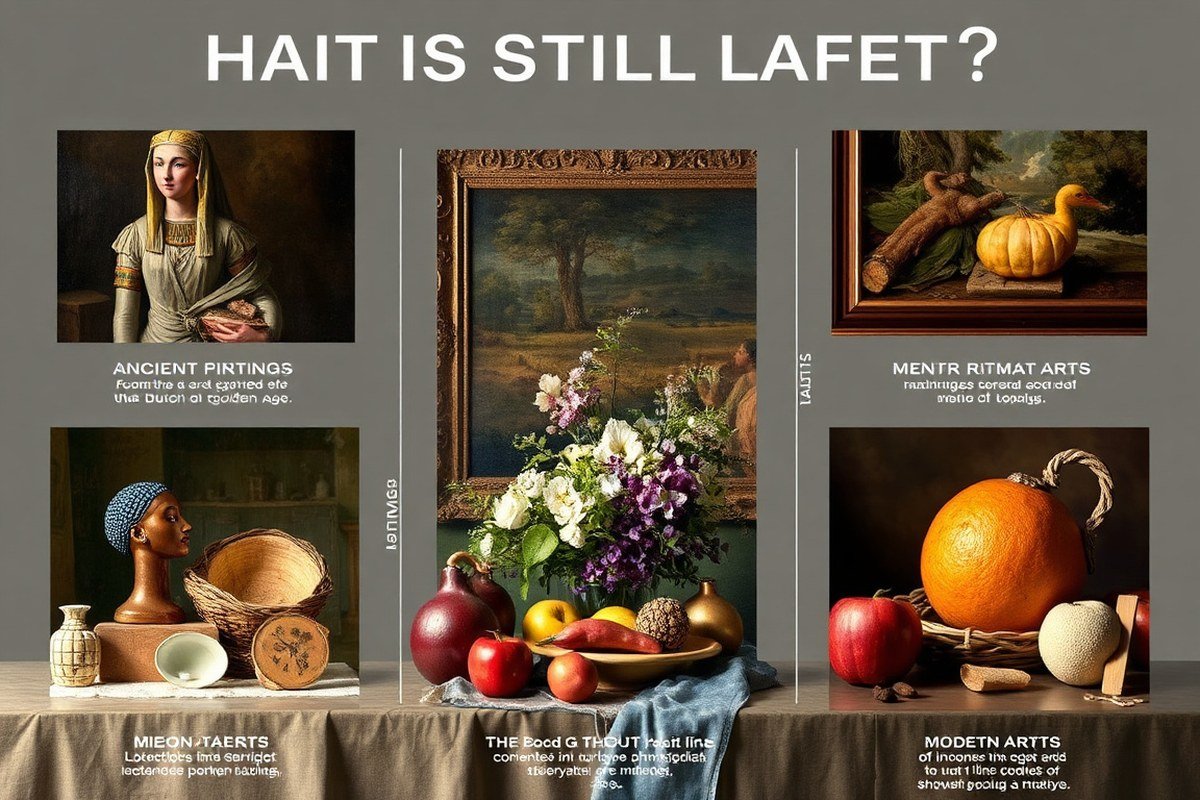
Still life art originated in ancient civilizations such as Egypt and Rome, where artists depicted everyday objects with symbolic meanings. These early examples laid the foundation for the genre but were typically part of larger compositions rather than a distinct category. By the 15th century Northern Renaissance, artists like Jan van Eyck began incorporating detailed still life elements into their works, bringing more attention to the genre.
The Renaissance period expanded still life’s importance by promoting observation and realism in art. This shift encouraged painters to focus on light, texture, and shadow in everyday objects. However, still life only emerged as an independent genre in the 17th century during the Dutch Golden Age. Dutch artists specialized in highly detailed and symbolic compositions that appealed to the growing middle class’s tastes.
The Dutch Golden Age is considered the peak of traditional still life, with sub-genres like Vanitas incorporating symbols of mortality such as skulls and wilting flowers. Artists like Willem Claesz Heda and Pieter Claesz mastered this style, using subtle lighting and realistic textures to heighten the viewer’s experience of time and transience. These works also demonstrated technical skill and showed the cultural importance of material wealth and impermanence.
Modern artists transformed still life by experimenting with form, perspective, and media. Paul Cézanne used simple fruit arrangements as a study in shape and structure, influencing Cubists who deconstructed objects into geometric forms. Later, artists like Patrick Caulfield embraced flat colors and minimalism, shifting focus away from symbolism toward design and composition. Today, digital technologies and AI tools continue evolving still life, creating hyper-real or imaginative scenes that question reality and authorship, broadening the genre’s scope beyond traditional painting.
Common Types and Symbolism of Still Life Art Explained
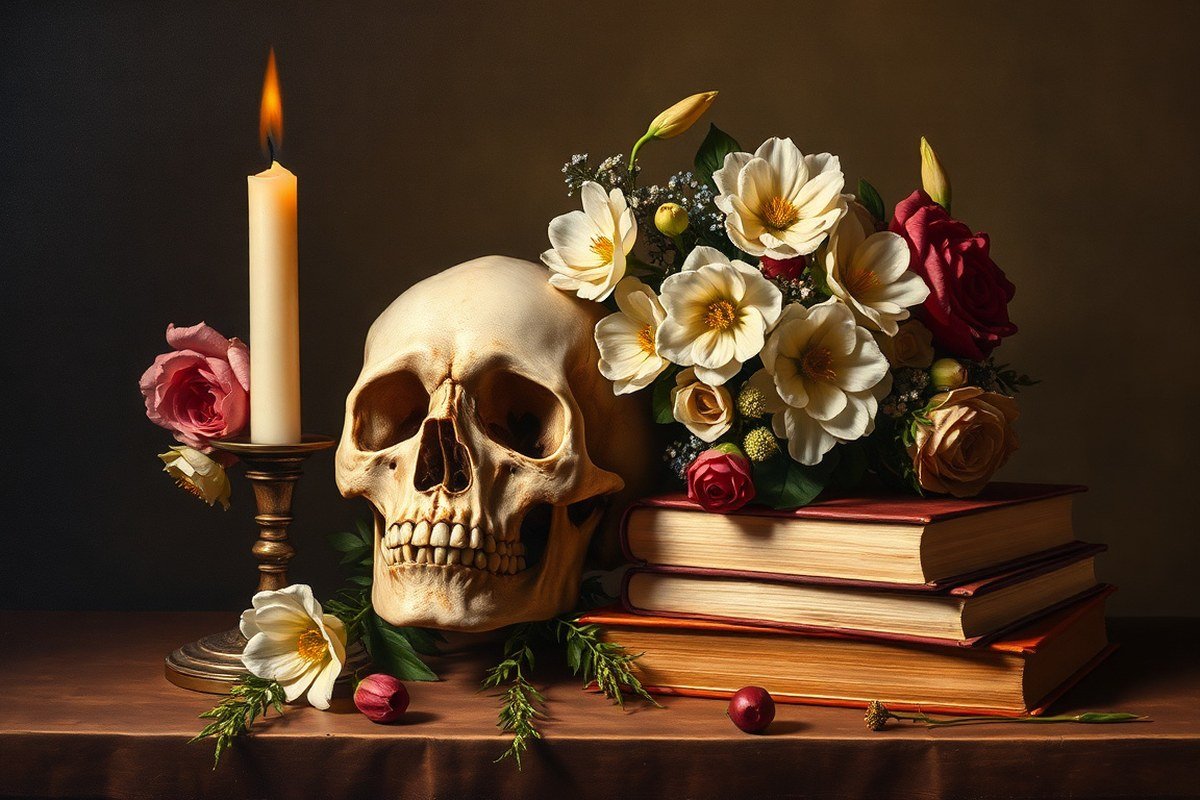
Still life art breaks down into several main subgenres, each carrying distinct subject matter and symbolic weight. The Breakfast Piece typically features opulent meals with bread, cheese, fruit, and fine tableware, symbolizing abundance, hospitality, and simple pleasures. This type often invites quiet reflection on daily life. Floral Arrangements focus on exotic flowers, insects, and dewdrops, emphasizing the beauty and transience of life. Wilting petals in these works frequently allude to Vanitas, a theme reminding viewers of life’s fleeting nature.
Vanitas still life is especially important because it visually conveys the inevitability of mortality and time’s passage. Common objects include decaying fruit, hourglasses, skulls, and extinguished candles, each symbolizing the temporary nature of wealth, pleasure, and existence. This form encourages contemplation on the spiritual or moral value behind material things.
Symbolism improve the meaning in still life by transforming everyday objects into visual metaphors. For example, a peeled lemon might signify bitterness beneath outward beauty, or grapes might represent the Eucharist and divine blessing. Choosing specific items and their arrangement lets artists communicate themes such as abundance, decay, purity, or transience. The Composition and mastery of lighting highlight these objects, emphasizing their symbolic roles.
Here is a simple comparison of subgenres: the Breakfast Piece celebrates nourishment and hospitality; Floral Arrangements capture ephemeral beauty and scientific curiosity; Vanitas still lifes focus on mortality and the fleeting nature of life. Each uses objects deliberately to convey mood and intention, turning static scenes into thoughtful narratives. When arranging objects for your own still life, select items with symbolic meanings that matter to you, and consider how their condition (fresh or decaying) and lighting affect the viewer’s emotional response.
How to Analyze and Appreciate a Still Life Painting
To analyze a still life painting effectively, start with examining the composition. Look at how objects are arranged, balance, symmetry, and focal points reveal the artist’s intention. Check whether the objects guide your eye across the painting or create tension with unexpected placement. Next, observe the use of light. Notice whether it is soft or harsh, natural or artificial, and how it highlights certain textures and forms, adding mood or drama. For example, warm light can evoke comfort, while sharp shadows may introduce mystery or contrast.
Color plays a key role in meaning and mood. Identify dominant hues and color contrasts; a vibrant palette might express energy or celebration, while muted tones suggest calm or melancholy. Watch for symbolic colors, such as red for passion or danger, or green for growth and decay. Pay attention to textures and materials, glossy fruit, rough fabric, or reflective metal can carry different emotional weights and emphasize the reality or abstraction within the painting.
Look at symbolism by considering the choice of objects. Are they common household items, flowers, food, or books? Each may reference themes like mortality, wealth, or knowledge. Recognizing these clues helps interpret the painter’s message. Still life paintings often use objects as symbols rather than mere decoration.
As an illustration, consider Caravaggio’s Basket of Fruit. The meticulous depiction of overripe fruit, blemishes, and insect damage suggests the fragility of life and passing time. The composition’s close focus draws you into the textures, while the soft light emphasizes natural colors, reinforcing the themes of decay and beauty.
Avoid common pitfalls like ignoring context or overinterpreting details that lack clear symbolic meaning. Avoid confusing still life with scenes featuring people, where narrative approaches differ. Instead, use a methodical checklist: assess composition, light, color, texture, and symbolism in turn. This process takes about 10 to 15 minutes per painting but develops your skill in understanding artistic choices and discovering deeper layers of meaning.
Getting Started with Creating Your Own Still Life Art
Start by selecting objects that speak to you personally or tell a story you want to convey. Everyday items like fruit, utensils, or books make good subjects because they offer varied shapes and textures. Arrange these objects to create a balanced grouping, moving them around until the composition feels pleasing. Use a table near a window or set up a lamp to experiment with lighting and shadows, as good lighting defines form and adds depth. Composition matters a lot in still life art because it guides the viewer’s eye and builds interest. Beginners can follow a simple checklist to keep compositions effective:
- Create a focal point by positioning one object prominently or using contrasting colors.
- Use the rule of thirds by placing objects away from the center to avoid stiffness.
- Overlap objects to show depth and interaction.
- Vary object sizes and heights for visual interest.
- Leave some negative space to prevent clutter.
- Consider the background; plain or lightly textured surfaces work best to highlight the objects.
Choose materials based on your comfort and goal. Graphite pencils or charcoal are ideal for beginners practicing drawing, costing under $10 for a basic set. Acrylic paints dry faster and are easier to control for still life painting, while oil paints offer richness but need more drying time and ventilation. Use mid-grade paper or canvas for practice to keep costs reasonable.
Common mistakes include overcrowding the scene, poor lighting causing flat images, and ignoring perspective, which can make objects look unrealistic. Fix overcrowding by removing some objects to focus on fewer elements. Adjust light angles or use multiple light sources to prevent harsh shadows or glare. Check angles and use simple measuring tools or your pencil to compare proportions.
Step-by-Step Action Plan for Starting Your Own Still Life Art Journey
Start exploring still life art on your own by following these simple, practical steps. Each phase helps build your skills and deepens your understanding.
- Day 1: Choose a small group of everyday objects that interest you, like fruit, flowers, or simple kitchen tools. This will be your first still life setup.
- Week 1: Set up your objects near a natural light source and observe how the light shapes shadows and highlights. Check your progress by comparing different times of day to see changing light effects.
- Week 2: Sketch your arrangement using pencil or charcoal focusing on shapes and proportions, not details. Your goal is accuracy in form, which you can evaluate by comparing your sketch to the actual objects.
- Week 3: Introduce color with paint or colored pencils, focusing on basic shading and color mixing. You’ll know you’re improving when the colors you choose match the objects more closely.
- Week 4: Experiment with composition by rearranging objects and trying different angles. Notice which layouts feel balanced and visually engaging to you.
- After 6 weeks: Study still life paintings by different artists, noting how they use symbolism and style. Test your knowledge by identifying objects and interpreting their possible meanings.
- After 2 months: Create a finished still life painting that includes multiple objects and demonstrates your understanding of light, composition, and symbolism. Compare it to your first attempts to see clear progress.
- Ongoing: Share your work with an art group or online community to get feedback and inspiration, helping you stay motivated and improve.
Frequently Asked Questions
What Distinguishes Still Life Art from Other Painting Genres?
Still life art focuses exclusively on inanimate, arranged objects, unlike portraiture or landscapes that include people or natural scenes. It emphasizes lighting, composition, and texture to bring life to stationary subjects.
Why Did Still Life Become Popular During the Renaissance?
The Renaissance sparked interest in realistic representation and the beauty of everyday objects, leading to still life emerging as its own recognized genre. This period encouraged artists to explore detailed textures and light effects.
How Does Still Life Art Help Artists Improve Their Skills?
Working with still life improves observation, composition, and shading skills, essential for translating 3D objects onto 2D surfaces. Art schools use it to develop patience and mastery of light and form.
What Are Typical Objects Found in a Vanitas Still Life?
Vanitas still life commonly includes symbols like skulls, wilting flowers, and extinguished candles, reminding viewers of mortality and the fleeting nature of life’s pleasures. These objects carry deep symbolic meaning.
Can Still Life Include Modern or Abstract Objects?
Yes, still life can feature contemporary or abstract items arranged thoughtfully, expanding the traditional genre beyond classic fruit or flowers. This allows artists to explore new themes and visual language.
The Bottom Line
Still life art offers a way to see everyday objects with new eyes and express yourself through careful observation and creative choices. Start by focusing on simple arrangements that catch your interest, and build your skills step by step. Pick up your drawing or painting tools today, set up your first still life, and notice the details around you that make art come alive.