Can You Sell AI Art? A Complete Guide with Best Platforms and Pricing Tips
Can you sell AI art? Yes, you can legally sell AI-generated art, but you must use AI tools that permit commercial use and respect copyright laws. Start by choosing platforms with clear policies that support AI art sales to avoid legal issues and make your first sale smoothly.
Key Takeaways
- Choose AI tools like Midjourney with paid plans that allow commercial use before creating sellable art.
- Sell digital wall art prints or themed clipart on Etsy to tap into popular, affordable product categories.
- Use print-on-demand services on platforms like Redbubble or Society6 to sell AI designs on apparel, covering material costs with a 40-60% margin.
- Price digital downloads between $3 and $15 to attract volume buyers and increase steady income.
- Market AI art with keyword-rich titles and clear mockups to improve visibility and sales on marketplaces.
- Consider Fiverr for custom AI art commissions, pricing projects from $25 up to $200+ to reach clients needing unique work.
Is It Legal to Sell AI-Generated Art?
You can legally sell AI-generated art if the AI tool you used grants you commercial rights. Most popular AI art generators like Midjourney, DALL-E 3, and Adobe Firefly include commercial licenses in their paid plans, but these licenses vary. Always check the specific terms of service before selling your creations to ensure you have the proper commercial use rights.
Copyright ownership of AI art generally depends on the Amount of human input involved. Purely AI-generated images with minimal human alteration often lack copyright protection in the U.S. Because copyright law requires original human authorship. Substantial human modification or creative contribution strengthens your claim to copyright and helps avoid legal challenges.
“Human input” means more than just clicking a button. It involves thoughtfully guiding the AI, tweaking prompts, editing outputs, or combining AI results with your own elements. The more unique human creativity you add, the stronger your legal position will be regarding ownership and protection.
Legal risks in selling AI art come from ignoring usage licenses or misrepresenting ownership. Some AI generators restrict commercial use unless you subscribe to certain plans, and violating these terms can lead to platform bans or legal notices. Also, you often won’t own exclusive rights, meaning others may create similar AI images. This can affect how you price and market your art.
Before selling, follow a simple checklist: verify that the AI tool’s license explicitly permits commercial use, confirm your modifications count as substantial human creativity, and ensure your sales platform allows AI art sales. For instance, if you’re using Midjourney, confirm you have a Pro or higher subscription to secure full commercial rights. If any of these points are unclear or negative, hold off from selling until you clarify them.
Where and How to Sell AI-Generated Art Online
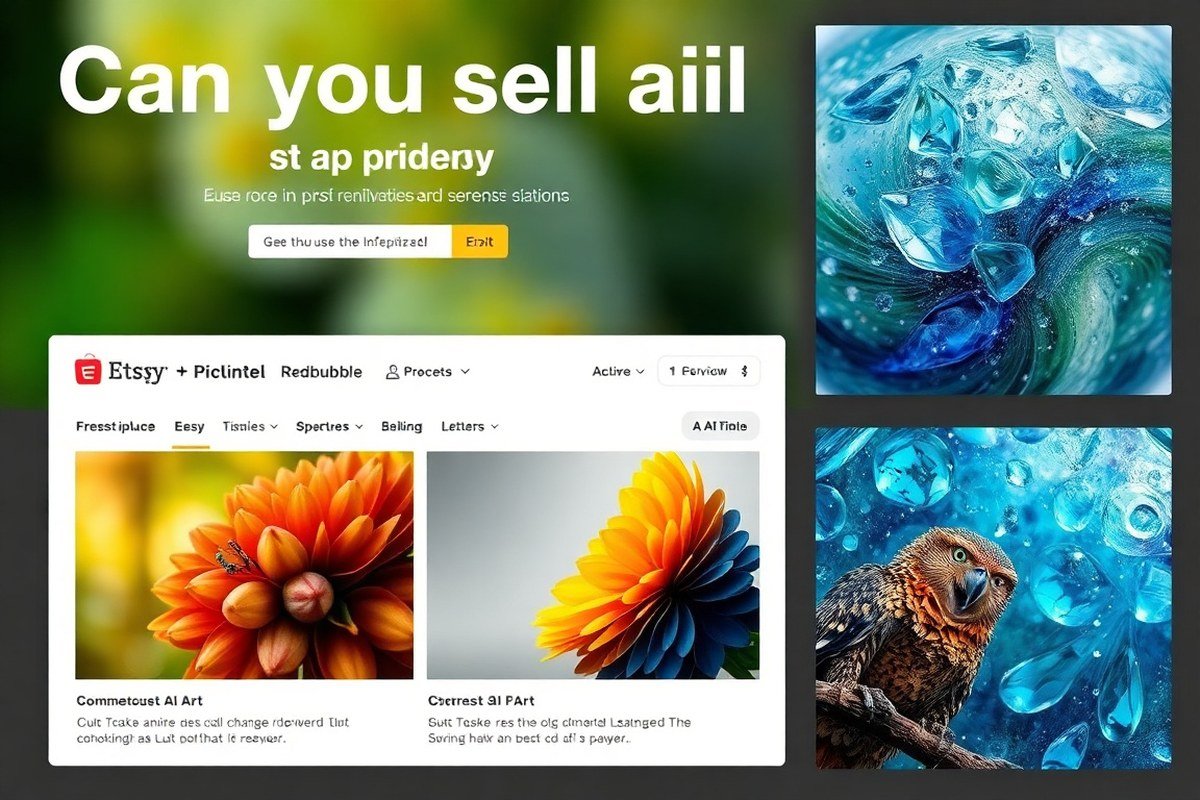
Various platforms let you sell AI-generated art, each charging different fees and appealing to diverse audiences. Etsy, a popular choice, charges $0.20 for each listing plus a 6.5% fee on transactions. Digital prints on Etsy usually sell between $3 and $15, so it’s important to consider fees when setting your prices. Etsy helps you connect with a wide creative community and supports both digital downloads and physical prints through print-on-demand services.
Print-on-demand marketplaces like Redbubble, Society6, and Zazzle let you upload AI art designs to be printed on items such as t-shirts, mugs, and posters. These platforms handle production and shipping, which reduces your workload but usually give you an average profit of $5 to $10 per sale. You typically need 100 to 200 sales to earn about $1,000, making consistent marketing necessary. Redbubble and Society6 have their own policies allowing AI-generated content but checking those regularly ensures your art complies.
Selling custom AI art commissions on Fiverr is another option. Prices range from $25 up to $200 or more, with top sellers offering brand package services for $200 to $1,000. Fiverr takes a 20% commission on sales, so pricing accordingly is important. Commissions can be profitable if you build a strong profile and client base since fewer sales are needed compared to print-on-demand products.
Maintaining your own website gives you the most control over pricing, branding, and customer experience without platform fees, except those for payment processing. Using eCommerce tools like Sellfy or Shopify lets you sell digital downloads, prints, or commissions directly. However, you must handle marketing and traffic generation. This option suits artists ready to invest time into building a brand and audience.
Here is a comparison to consider: Etsy charges $0.20 per listing plus 6.5% transaction fees, suitable for digital downloads and prints; print-on-demand marketplaces offer simplified production but lower profits per sale; Fiverr focuses on service-based commissions with a 20% fee; your own website requires effort to attract buyers but avoids selling fees. Choose based on your product type, audience reach, and willingness to manage sales independently.
To get started on Etsy, create an account, upload your AI-generated art, and set your prices considering fees. For print-on-demand, sign up on sites like Redbubble, upload your designs, and select products to feature. On Fiverr, create a gig offering AI art generation or customization services. Building a website requires you to add payment processing options and clearly showcase your products for easy browsing. Each method fits different goals, POD works well for passive sales, commissions are profitable but require time, and owning a site offers full business control.
How to Price AI Art Products Effectively
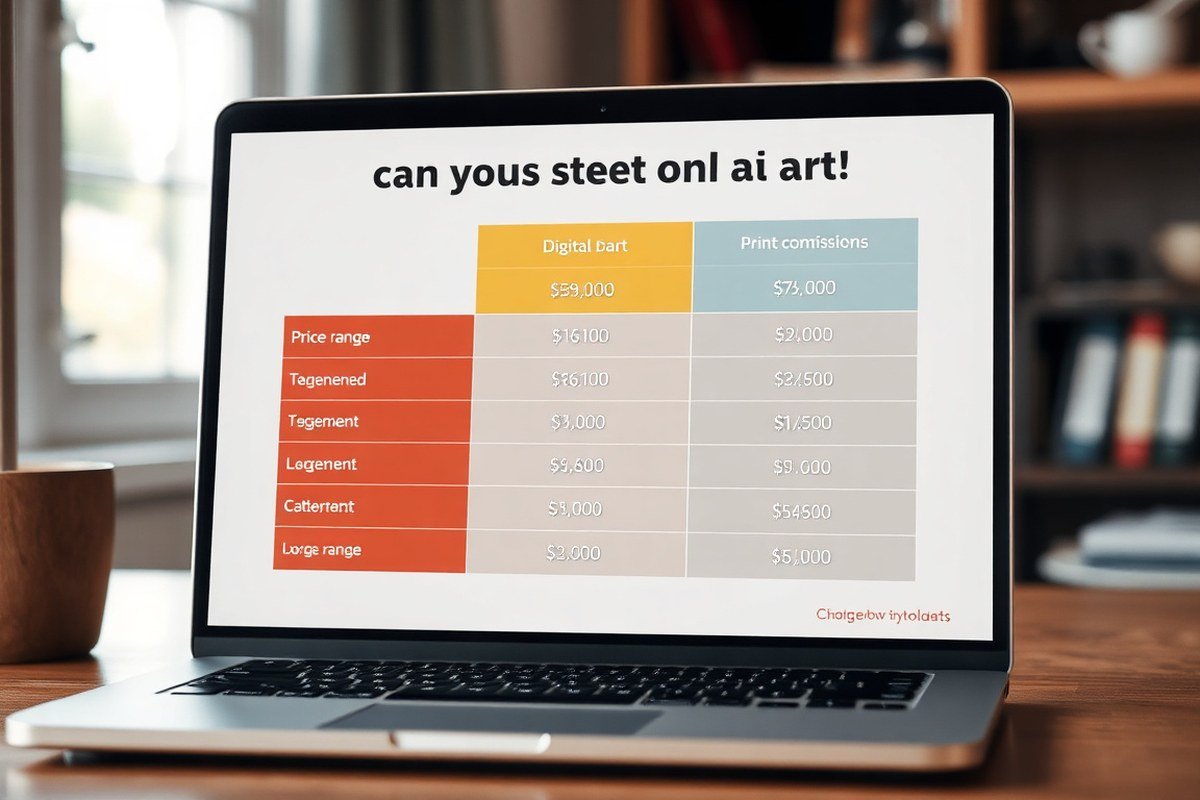
Pricing your AI art products effectively depends on the type of product, production costs, platform fees, and your desired profit margin. For digital AI art downloads like wall art prints, setting prices in the range of $3 to $15 works well, reflecting typical market rates. For example, if you spend zero on materials but want to factor in a 5% transaction fee from a platform like Etsy, price a digital print at $10. The fee is $0.50, leaving $9.50 before taxes and your time. This keeps your price competitive while ensuring income after fees.
Physical products such as posters and prints sold via print-on-demand services usually cost $6 to produce, including fulfillment and shipping. Adding a 40% to 60% markup sets final prices between $15 and $45, covering your costs and profit. For instance, a poster requiring $8 production and shipping cost with a 50% markup leads to $12 plus $6, totaling $18. You might then round up to $20 to cover platform fees and slight fluctuations in cost.
When offering custom AI art commissions, start pricing around $15 to $50, depending on image complexity and time involved. Custom work commands higher prices because you spend more time tailoring the art to client needs. Factor in how many hours you spend generating and refining the art, then calculate an hourly rate you find fair. For example, spending two hours at $15/hour means a $30 commission minimum, plus platform fees if any.
Upscaling images to 300 DPI before selling can improve print quality but might justify charging extra if this requires significant additional work or software. Customers typically expect higher resolution for print products, so upgrades might add $2 to $5 to your base price depending on demand.
Adjust your prices based on platform fees and audience. Shopify charges $29 or more monthly but offers more control, so you might set slightly lower product prices to attract customers without high fees eating profits. Etsy’s per-sale fees mean you price accordingly to maintain margins. Keep your pricing flexible and test what works best for your product type and sales channel.
Choosing AI Tools That Allow Selling Your Art Commercially
Choosing the right AI art generator is key to legally selling your creations. Adobe Firefly stands out as the safest option for commercial use since its training data is licensed, minimizing copyright risks. Midjourney and DALL-E 3 also permit commercial sales but require paid subscriptions, Midjourney’s plans start at $10 per month. Using these paid plans, you own rights to images generated with your original prompts, but free or trial versions often restrict use to personal purposes only. Always review each platform’s terms because licensing rules vary significantly.
Checking for commercial rights involves confirming subscription status and carefully reading the user agreement. For example, Midjourney’s free trial explicitly prohibits selling generated images, while paid users get full commercial rights. Since prompt crafting influences copyright risks, avoid inputting protected names, trademarks, or copying specific artistic styles. Write descriptive, original prompts focusing on themes or abstract concepts to reduce infringement risks.
Print-on-demand products require high-resolution images, typically at least 300 DPI at the target print size. Upscaling AI-generated images before selling prints improves quality and avoids pixelation. Tools like Gigapixel AI or built-in upscalers in Adobe Firefly can help reach 3000 pixels on the longest side, suitable for posters or apparel. Check your final images for sharp details and consistent color profiles (usually sRGB) to ensure good print results.
Here is a basic comparison: Adobe Firefly allows commercial use on all accounts since it uses licensed and public domain data. Midjourney requires a paid plan for commercial rights, and free trials have personal use only. DALL-E 3’s free versions typically restrict commercial use, but paid subscriptions unlock it. Always verify you own the prompt and output and avoid copyrighted references in your prompts.
Marketing and Building a Brand to Boost AI Art Sales
Keyword optimization helps your AI art appear in searches on marketplaces and social media platforms. Use targeted terms like “AI-generated digital art,” “printable AI art,” and specific themes such as “nursery decor AI prints” or “fantasy AI artwork.” Include words buyers might type when looking for unique AI art. Place these keywords naturally in your titles, tags, and descriptions to improve ranking without keyword stuffing, which can reduce visibility.
Growing your audience on social media requires consistent posting and engagement. Share progress shots, final pieces, and behind-the-scenes posts across platforms like Instagram, Twitter, and TikTok, where visual content thrives. Use hashtags like #AIArt, #DigitalArt, and niche terms related to your style. Responding to comments and joining art communities helps build rapport and trust. An audience interested in AI art on these platforms can become repeat customers or buy your NFT drops and print-on-demand products.
Branding yourself as an AI art creator establishes your identity in a crowded market. Choose a clear name or handle, design a simple logo, and maintain consistent colors and fonts across your online profiles and product listings. This approach helps buyers recognize your work quickly. Transparency about your AI-assisted process can create authenticity and build trust, encouraging repeat buyers who appreciate your unique style.
Marketing AI art print-on-demand products works best with a tailored plan. Start by defining your target buyer, collectors, home decorators, or gamers. Next, schedule regular social posts featuring both the art and its application on merchandise. Consider collaborating with influencers in AI, digital art, or relevant niches for wider exposure. Set aside a modest budget for promoted posts to test what drives sales.
Building repeat customers depends on your ongoing interaction and reliable quality. Offer limited editions or exclusive releases to create urgency. Collect emails for newsletters that share new artworks, special discounts, and art tips. A simple checklist for consistent branding includes: using the same profile images and bios on all platforms, standardizing product packaging visuals, and keeping your tone and messaging uniform. This consistency reassures buyers and encourages loyalty over time.
Common Pitfalls and Ethical Concerns When Selling AI Art
Selling AI-generated art involves several Common legal pitfalls that you need to avoid to protect yourself. One frequent mistake is using copyrighted images, distinctive artistic styles, or protected text as inputs for the AI without appropriate rights or licenses. This can lead to copyright infringement, even if the finished piece looks different. Ensuring you have the legal right to use all components involved in creating your AI art is essential before offering it for sale.
Ethical concerns go beyond legality. Transparency with your buyers is key. Clearly disclose that your art was created with AI assistance. This avoids misrepresenting the nature of your work, which can damage trust and harm your brand in the long run. For example, explicitly stating in your product description or sales page “This image was generated using AI tools” helps manage expectations and supports ethical sales.
Handling disputes or takedown requests requires a calm, professional approach. Keep documentation of your creation process and any input sources to prove your rights if challenged. Respond promptly and respectfully to concerns, and if necessary, remove content to avoid escalation. Maintaining clear records and open communication reduces risk and shows responsibility.
To sell responsibly, follow a checklist: confirm usage rights for all source materials, monetize only after adding your own creative input if required, disclose AI involvement prominently, and monitor for potential disputes. Ethical best practices include respecting original artist rights, being honest with buyers, and staying informed on evolving copyright laws relating to AI. You should tailor transparency to your platform and audience, giving enough detail to build trust without overwhelming buyers.
Your First 30 Days: A Quick-Start Plan to Sell AI Art
Follow this plan to start selling AI-generated art legally and effectively. Each step focuses on building your sales presence while protecting your rights and reputation.
- Day 1: Research the AI tool’s commercial rights to confirm you can sell creations; success means clearly finding usage terms allowing sales.
- Week 1: Select and set up an online marketplace account (Etsy, Redbubble, or specialized AI art platforms); success means having your store live with a few sample listings.
- Week 2: Price 3-5 pieces based on complexity and comparable artwork; test by monitoring initial customer interest or inquiries.
- Week 3: Build your brand by designing a simple logo and writing a clear shop description emphasizing unique AI art qualities; success shows in improved profile views.
- Week 4: Launch a social media account focused on your AI art and post regularly; measure success by follower growth and engagement.
- After 1 Month: Review sales, customer feedback, and marketing performance; identify best sellers to focus on and adjust prices or promotion accordingly.
Frequently Asked Questions
Can You Sell AI Art Created with Free AI Tools?
No, free AI tools usually don’t grant commercial rights, so you can’t legally sell that art. Always check the AI service’s terms before selling your work to avoid legal trouble.
What Fees Should I Expect When Selling AI Art on Etsy?
Etsy requires a $0.20 fee to list each item, along with a 6.5% fee taken from the final sale price. These expenses reduce your earnings, so consider them when setting prices for your AI-generated digital prints, commonly priced between $3 and $15.
Can I Sell AI Art Through Print-On-Demand Services?
Yes, you can sell AI art on print-on-demand sites like Redbubble or Society6. These platforms handle printing and shipping, letting you focus on creating and marketing your AI artwork.
Does Selling AI Art Affect My Copyright Rights?
Selling AI art depends on the tool’s usage rights; if you have commercial rights, you typically hold copyright for your AI creations. Verify these rights to protect your ownership before selling.
Is It Better to Sell AI Art as Digital Files or Prints?
Both options work, but selling digital files offers lower costs and faster delivery. Prints may appeal more to certain buyers, so consider offering both to reach a wider market.
Key Points to Remember
You can sell AI-generated art legally and profitably by choosing the right tools, respecting copyright rules, and marketing thoughtfully. Start by confirming your AI app’s commercial rights today, so you know your work is safe to sell. Taking this first step keeps your art sales on solid ground.